
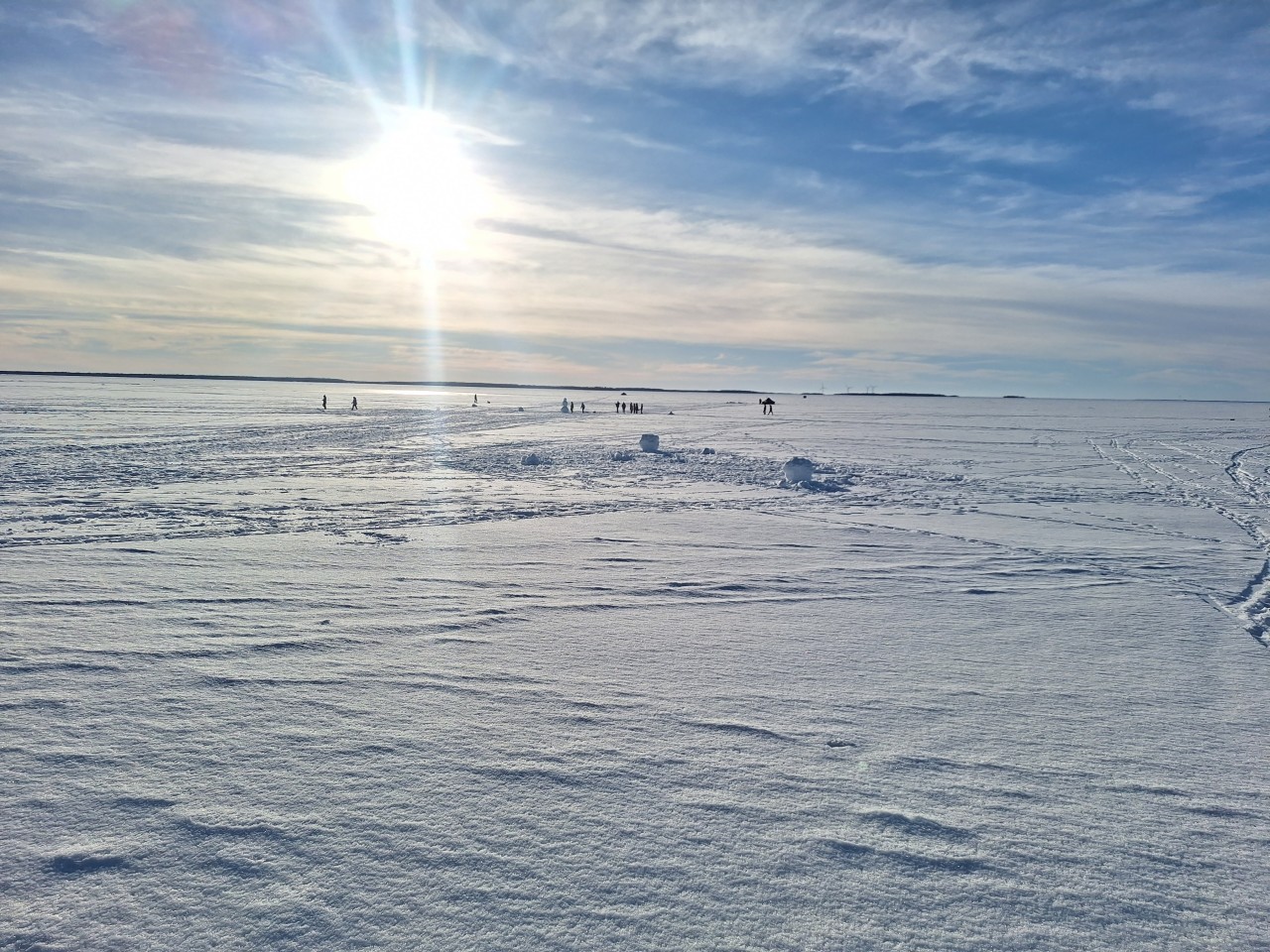
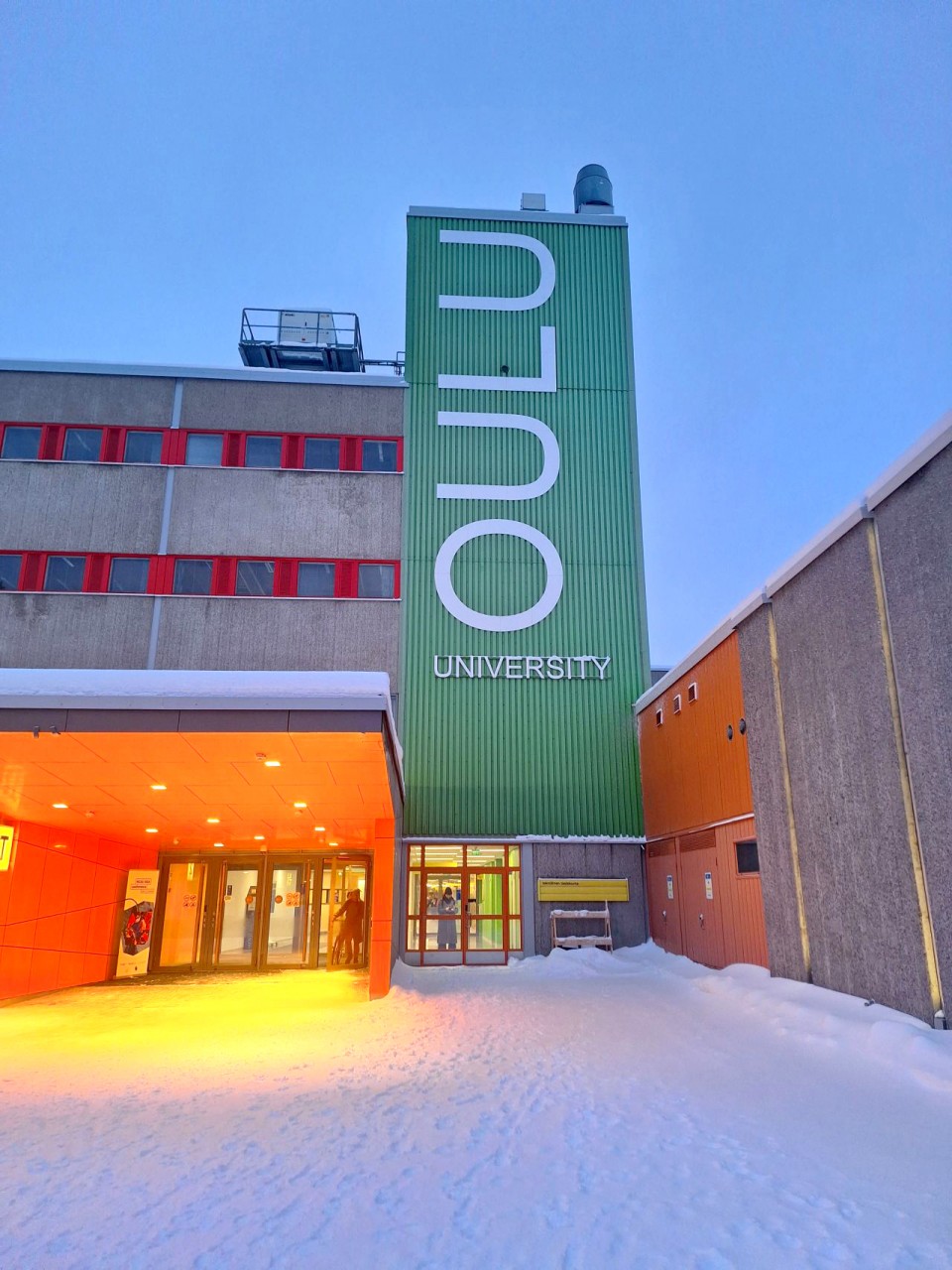
This year's ECSA Conference 2026 has concluded. We spent two full days traveling across half of Europe—by train, bus, and ferry—to reach northern Finland, more precisely the beautifully snow-covered city of Oulu. There, we experienced just how white snow can be and perhaps also why Finns—surrounded by forests, clean air, the frozen Baltic Sea, karaoke, saunas that are far too hot, dancing northern lights, and a rich cultural life—seem to enjoy such a content way of living.
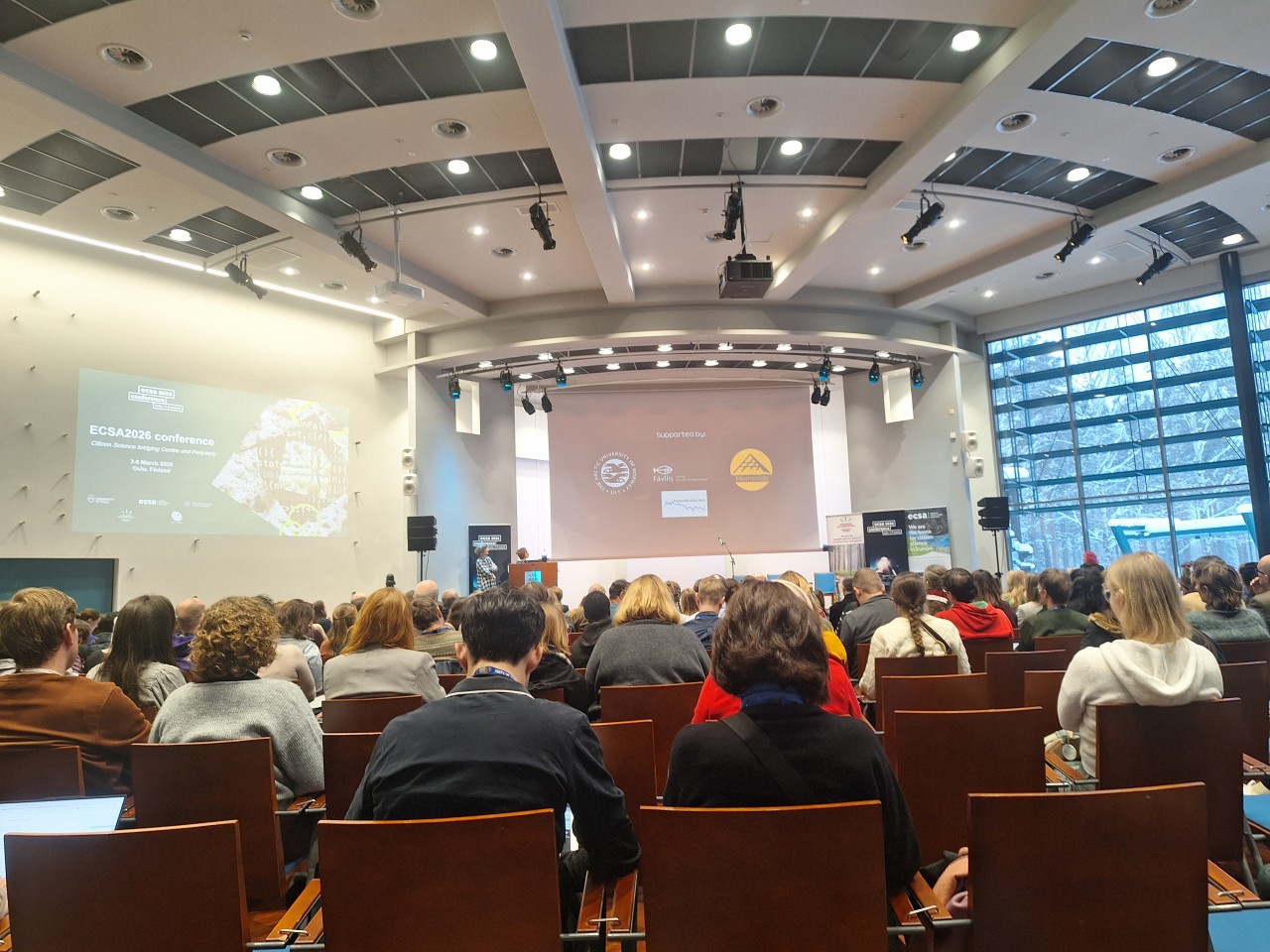
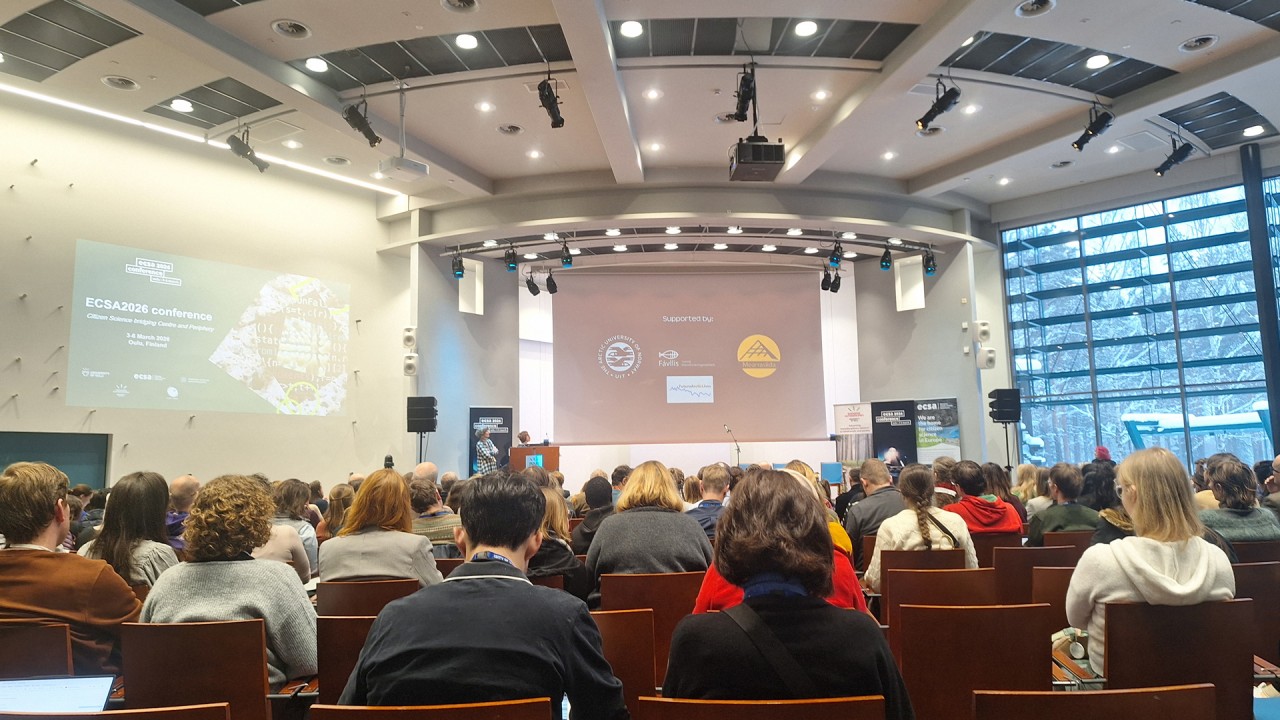
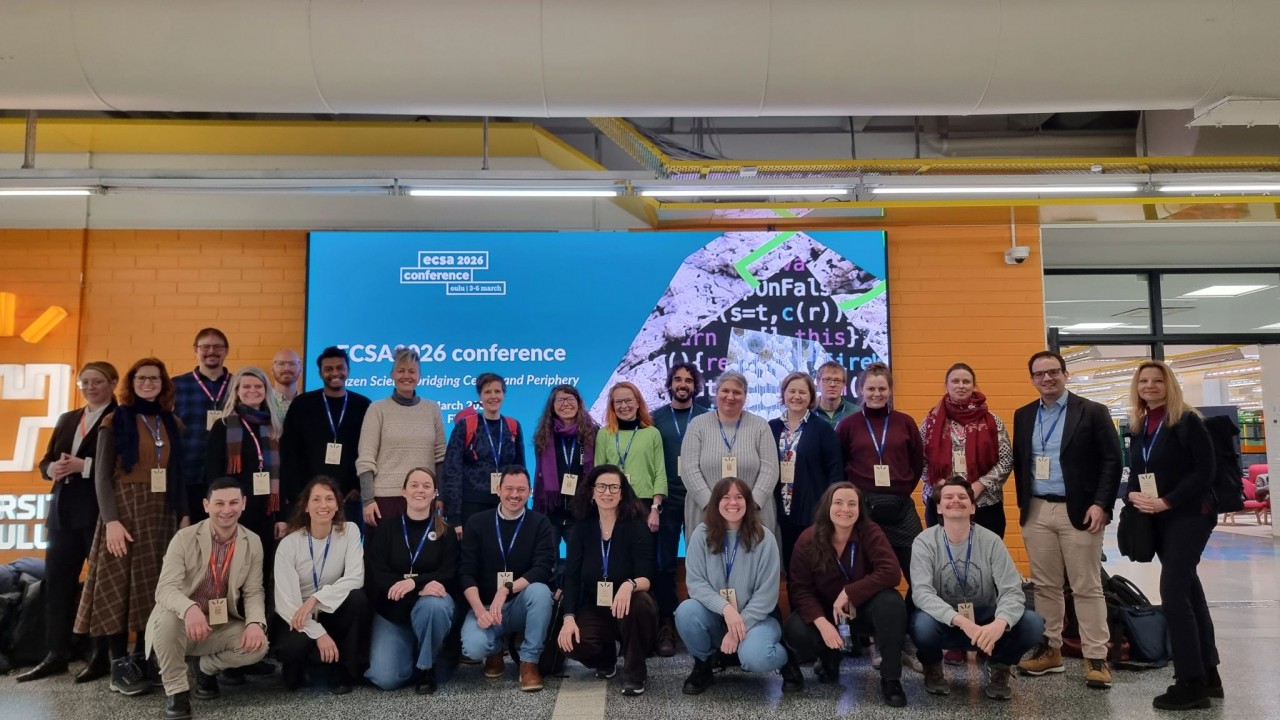
At the beginning of March, this unique Finnish atmosphere opened its doors to the European Citizen Science community, becoming the venue for the ECSA Conference 2026, organized with great care and attention to detail by the European Citizen Science Association (ECSA) and the University of Oulu. More than 600 researchers from across Europe and beyond attended, making it the largest ECSA conference to date.
In this blog, we would like to share some of our many impressions, offering a perspective slightly different from that of researchers. We attended as designers, as technical partners in the field of Citizen Science Apps, and most importantly: as Citizen Scientists.
What was there to see at ECSA Conference 2026?
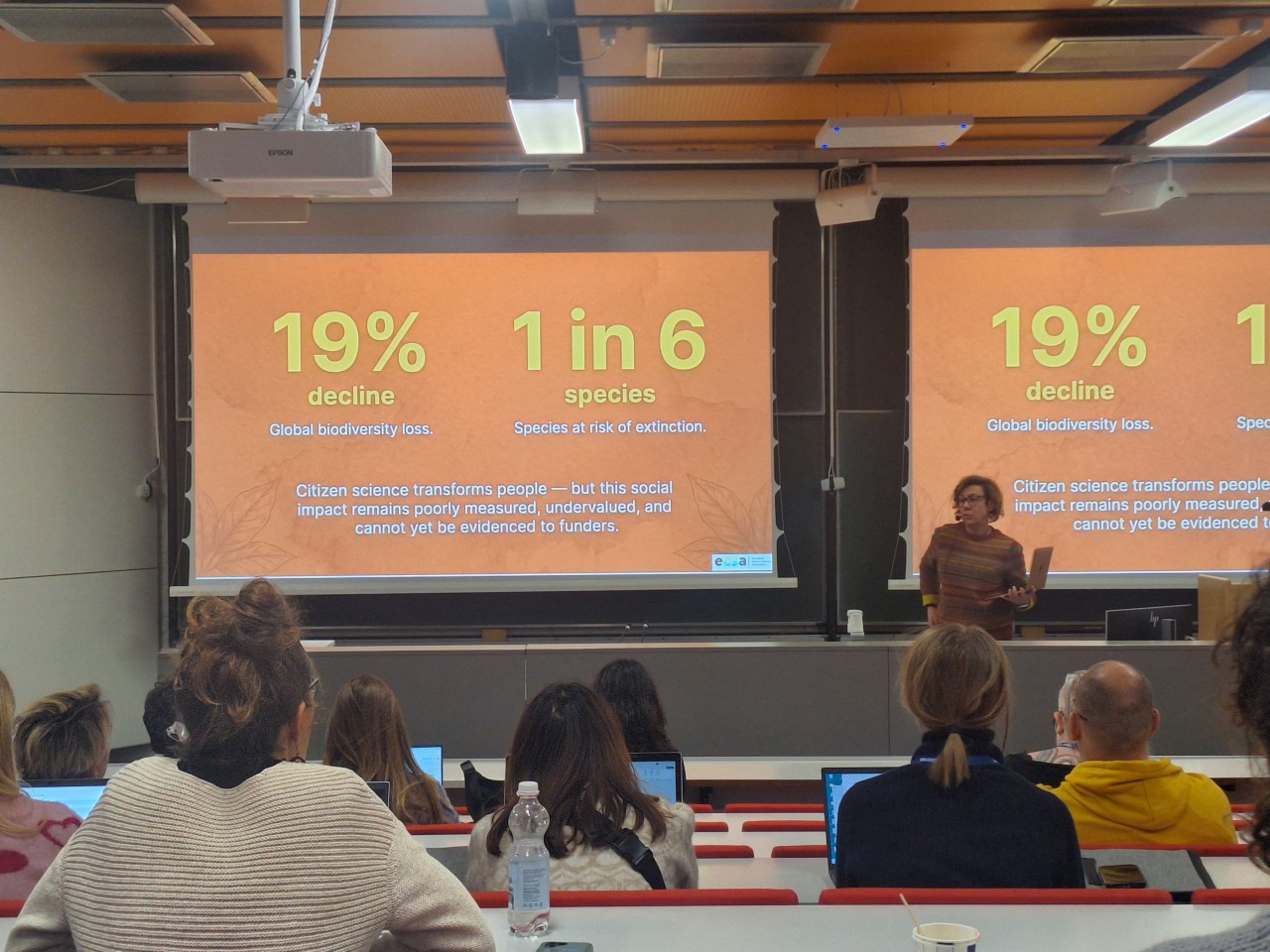
In short: quite a lot—far more than we could possibly attend. Across nine sessions, the program included panel discussions, roundtables, and workshops on topics such as inclusive Citizen Science and engaging "hard-to-reach" groups, Blue Citizen Science (oceans and coasts), Citizen Science in agriculture, gamification, and AI ethics in Citizen Science projects.
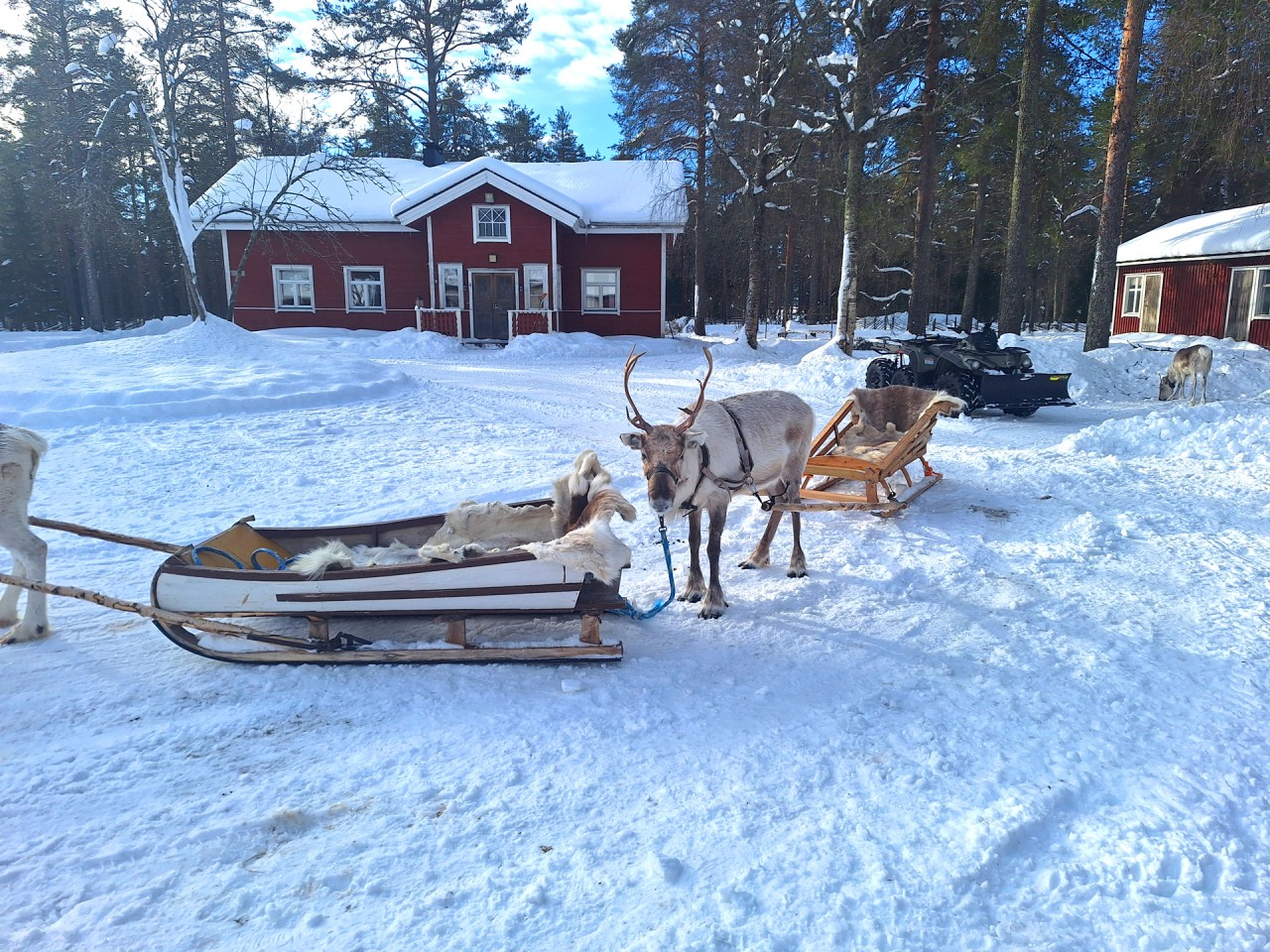
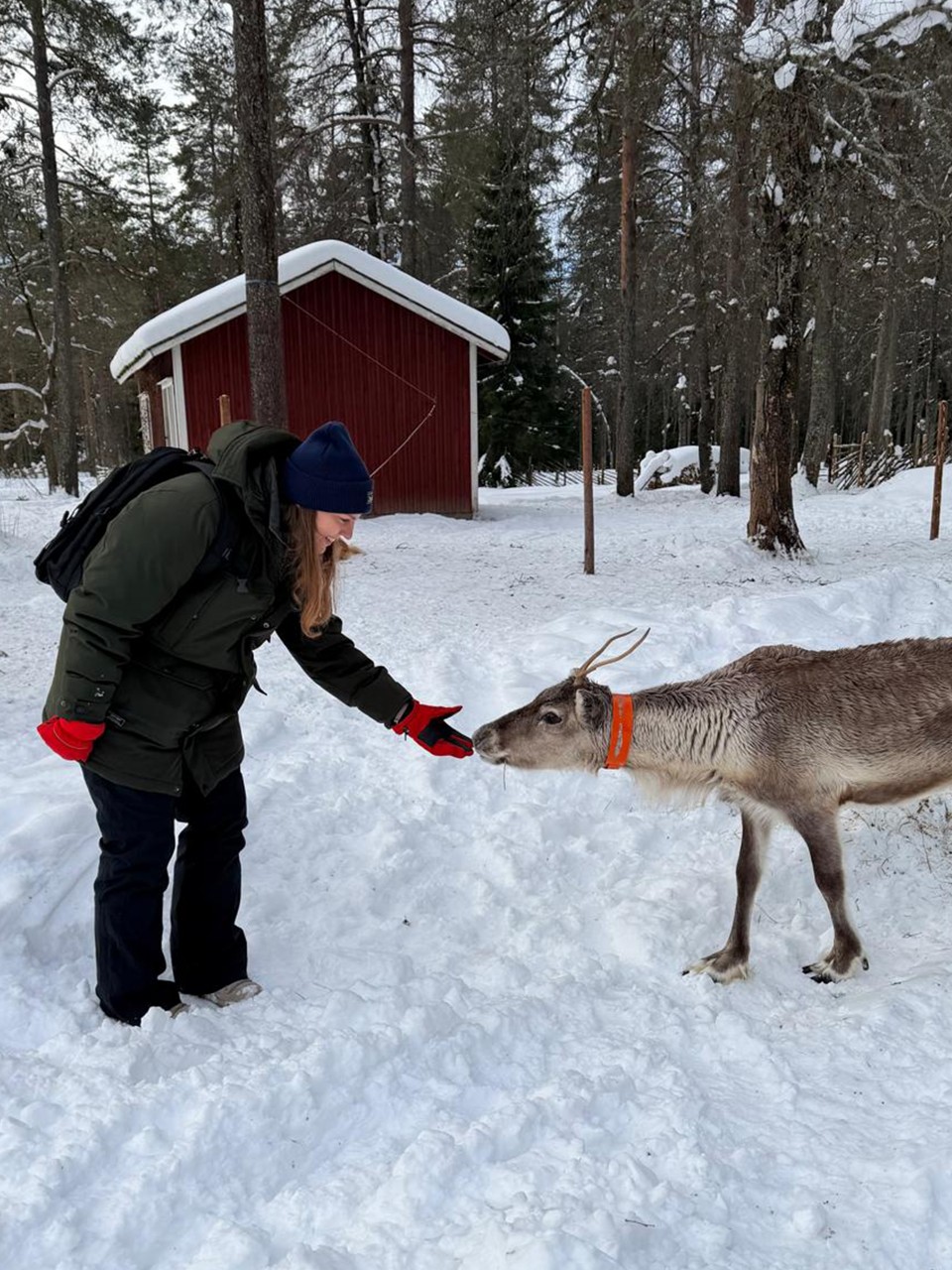
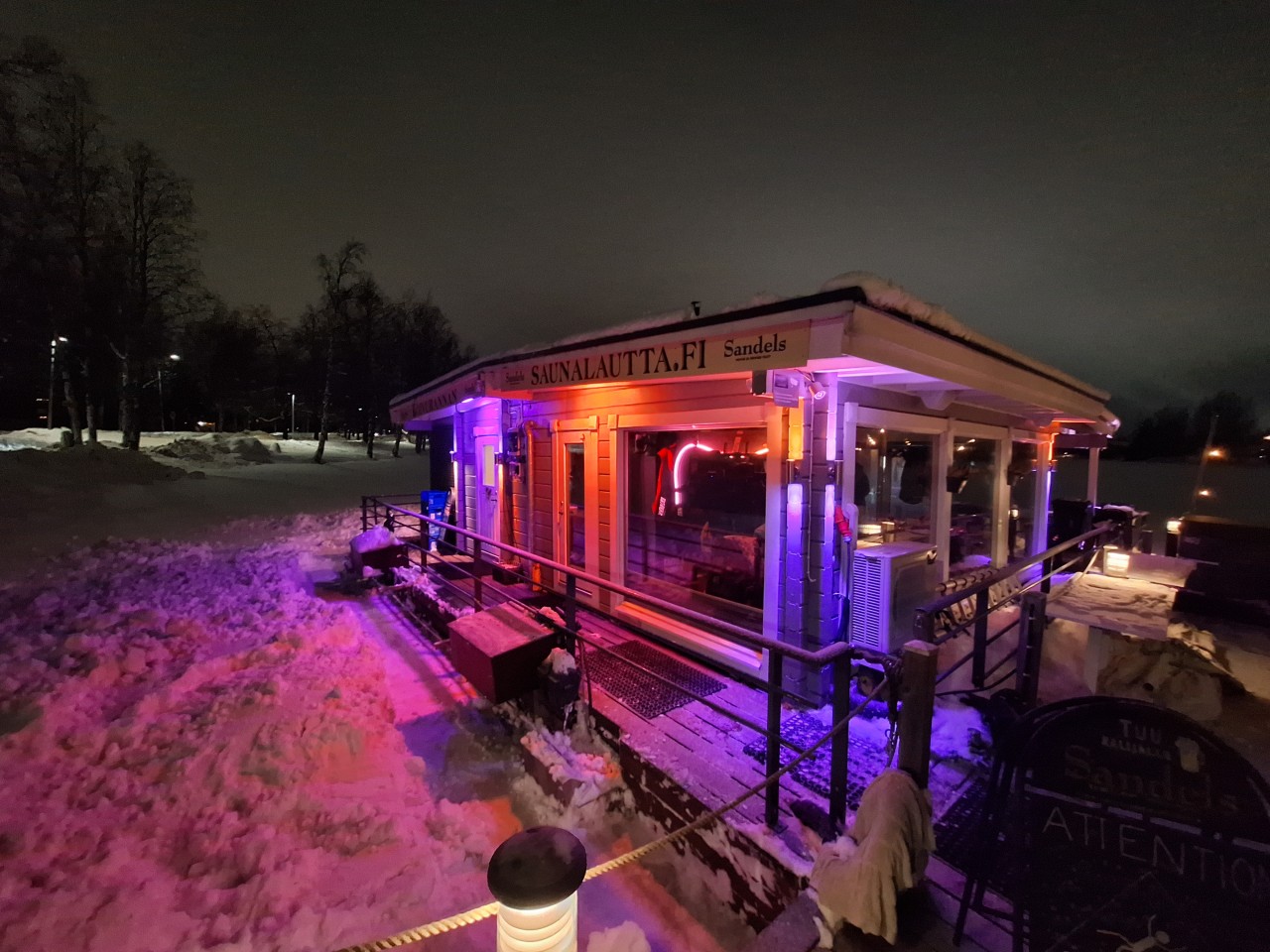
Firstly, we would like to extend our sincere thanks to all the organizers. Beyond the conference program itself, a wide range of activities and performances were arranged: from ice fishing and visits to the Poro-Panuma reindeer farm, to shared experiences in a floating sauna, the unique performance of the renowned screaming men's choir Mieskuoro Huutajat, and the moving opening speech by Sámi researcher Camilla Brattland.
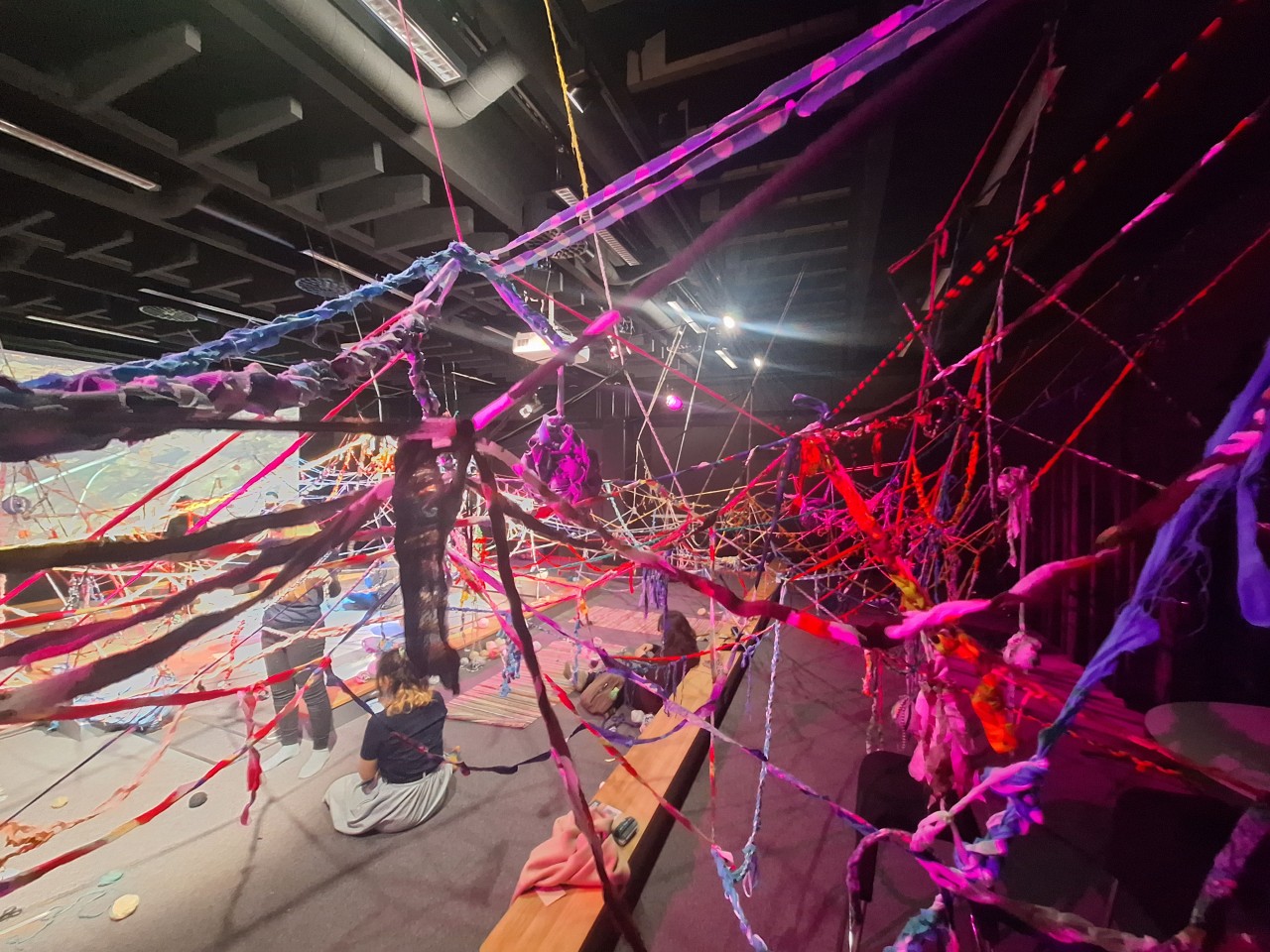
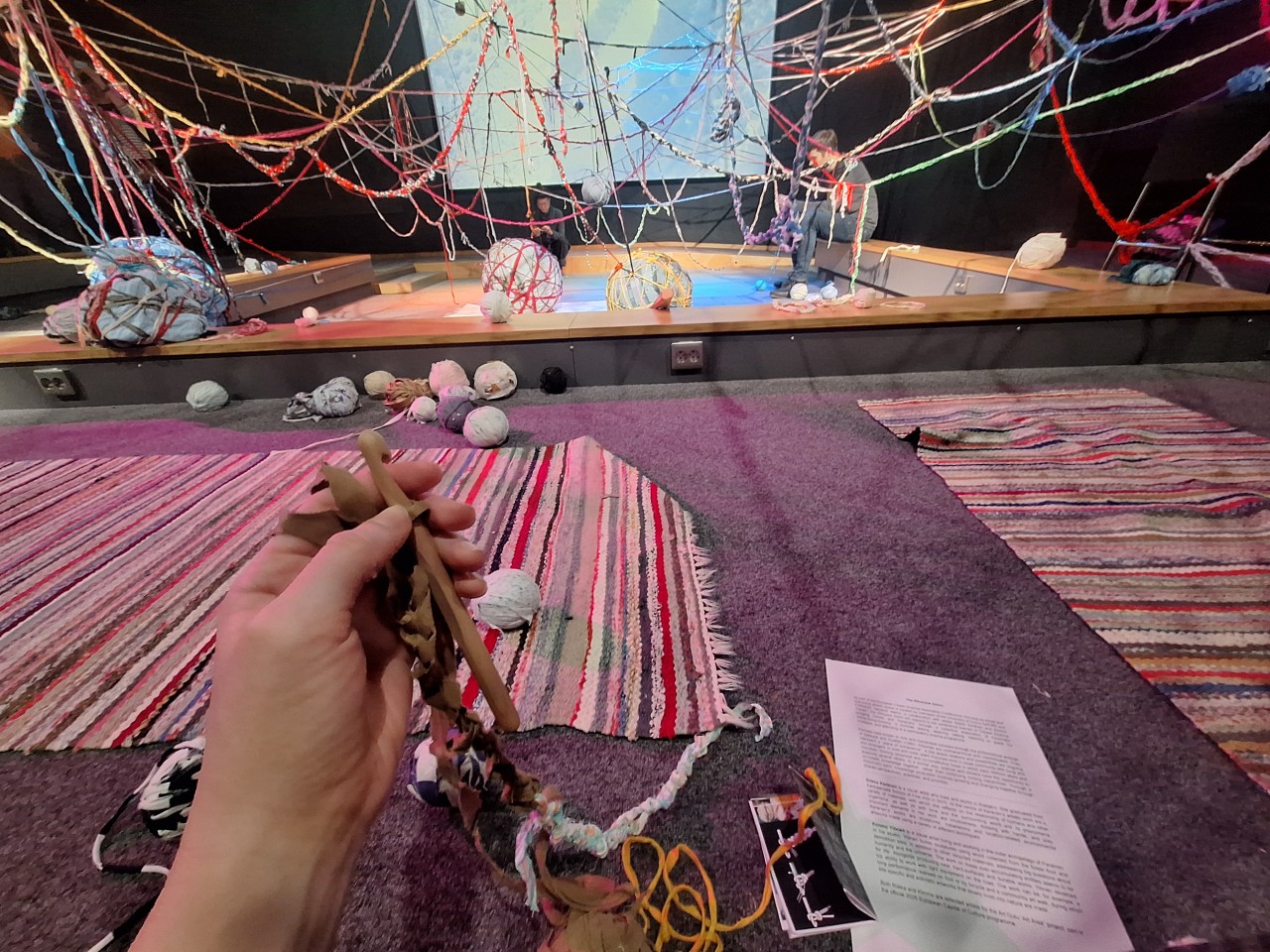
The organizers did an excellent job of conveying not only Finnish culture but also the challenges faced by northern communities, such as declining fish stocks and the destruction of reindeer habitats. We were particularly impressed by the "Rhizome Salon," a collaborative space where participants contributed to a growing installation by crocheting interconnected threads from recycled materials.
Our Table at ECSA Conference – Conversations and Insights
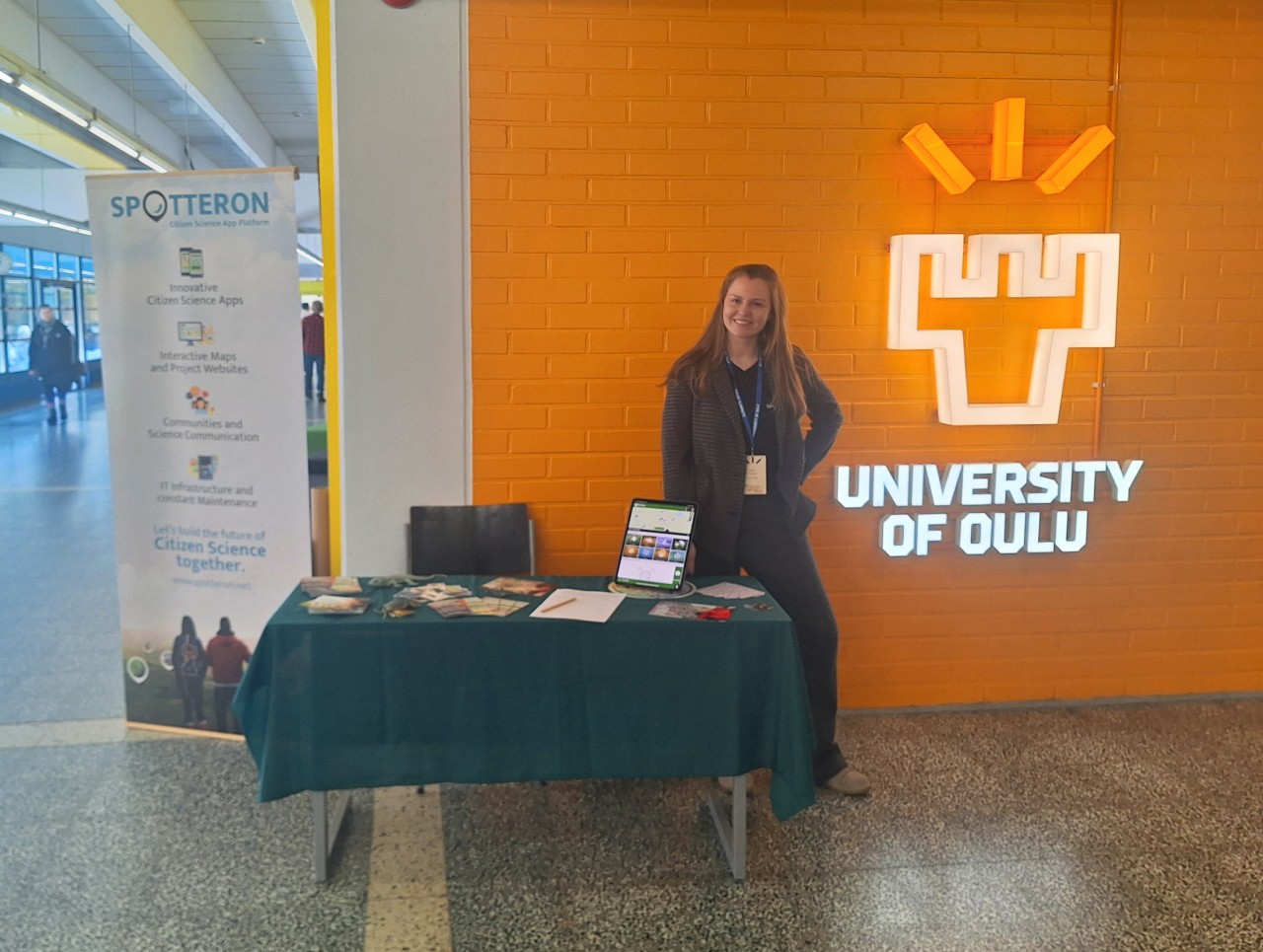
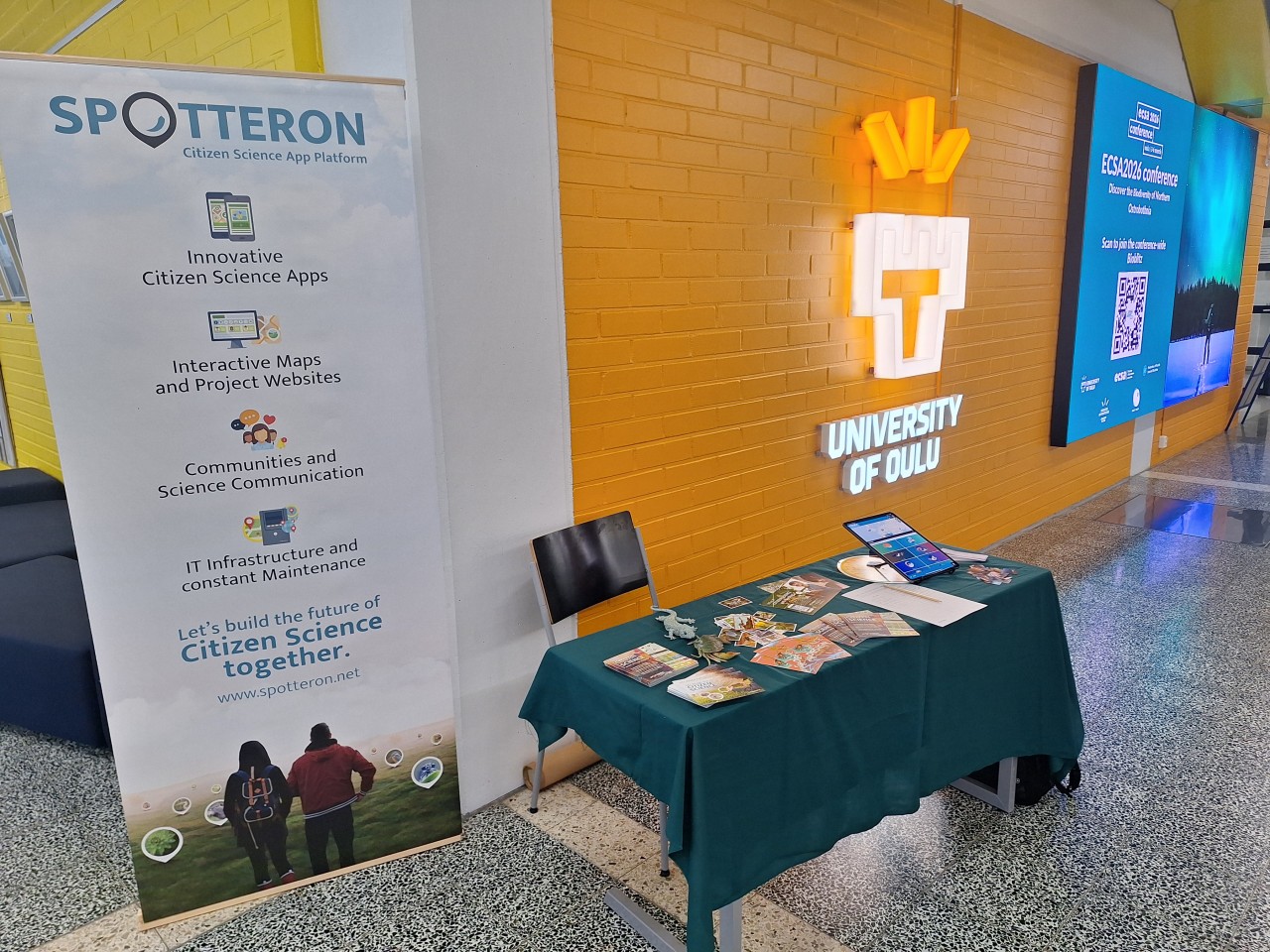
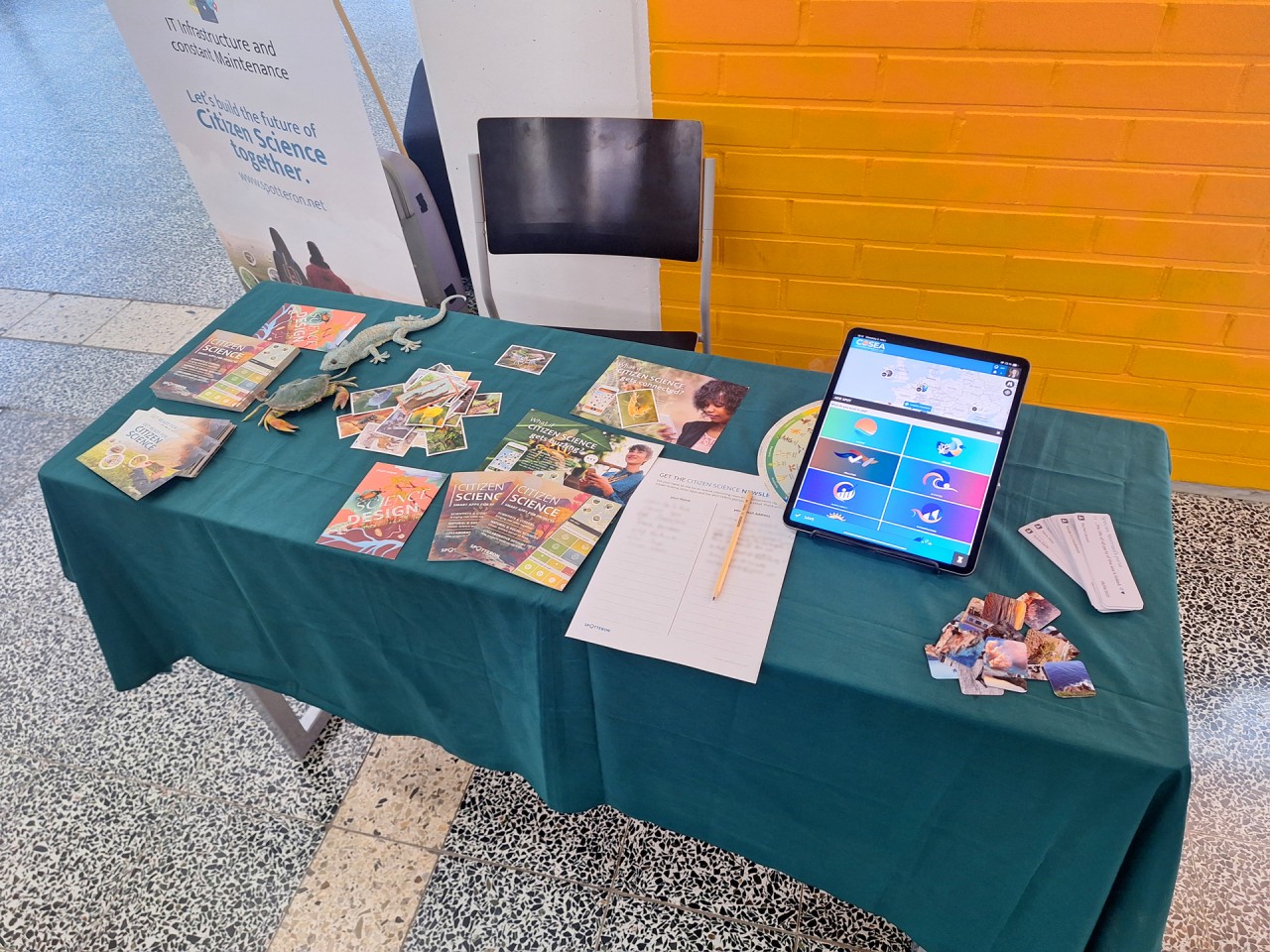
During the conference breaks, we hosted discussions at our table about projects and Citizen Science Apps. We met familiar faces, project partners, as well as researchers and students who had not yet worked with SPOTTERON.
Among them were many who had attempted to develop their own Citizen Science Apps and encountered challenges that led either to dissatisfaction or to abandoning the effort altogether. App development is a complex undertaking, involving technical expertise, data protection requirements, ongoing maintenance in app stores, secure data storage, functionality, UX design, usability, multilingual support, and much more.
These conversations reminded us, as the SPOTTERON team, how important our role is in supporting the development of interactive and secure Citizen Science technologies—past, present, and future. With over ten years of experience, strict adherence to EU data protection standards (GDPR and beyond), and continuous development of new features within our Project Ecosystem, SPOTTERON remains a key partner for the Citizen Science community in Europe and beyond.
We would like to especially thank everyone who visited our table for stopping by, for the engaging conversations, and for the honest exchange.
Poster Session – Saalestin Hall, University of Oulu (March 4, 2026)
On Wednesday, March 4, the poster session took place in Saalestin Hall. Among many inspiring contributions, we presented two posters:
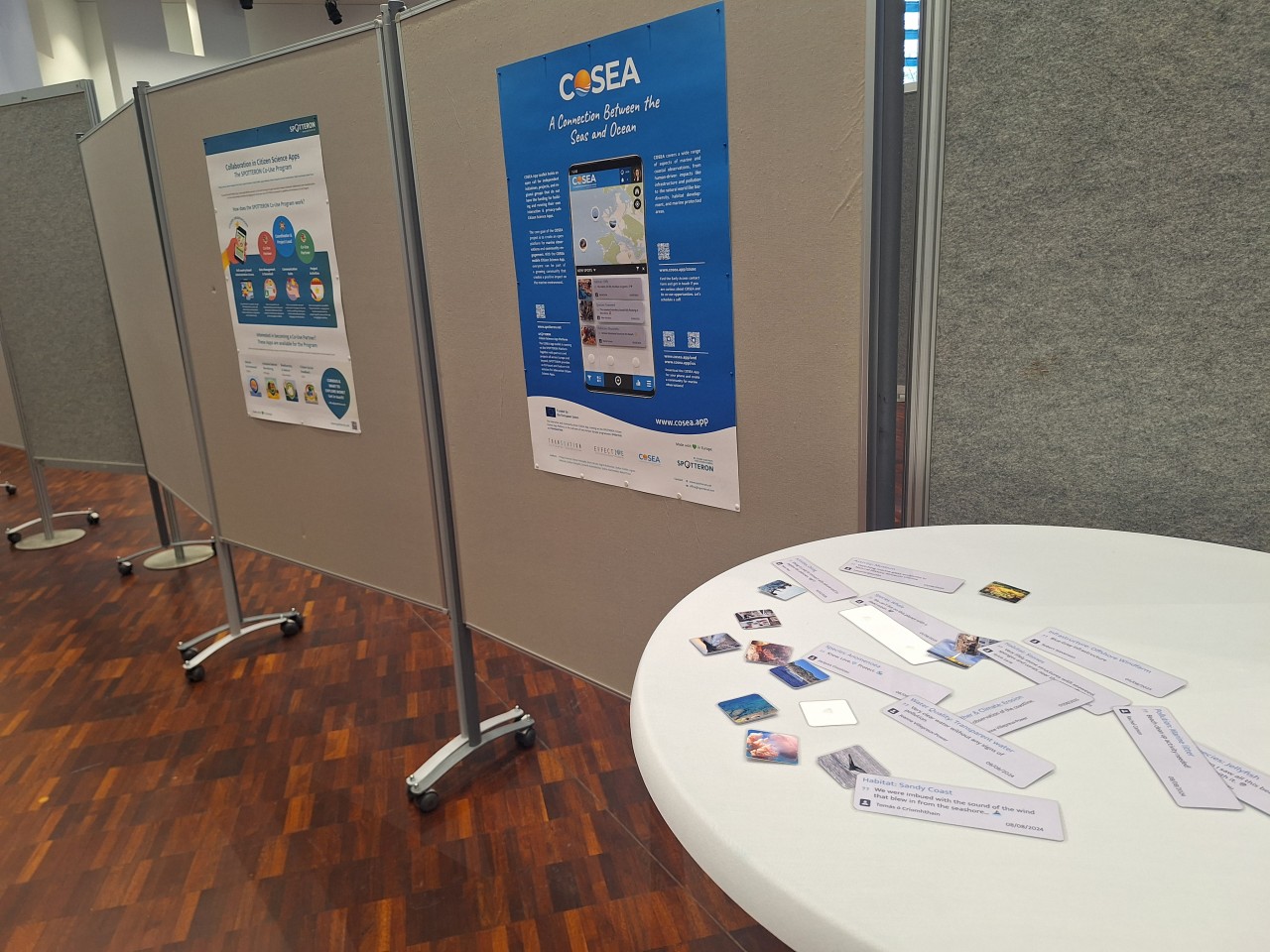
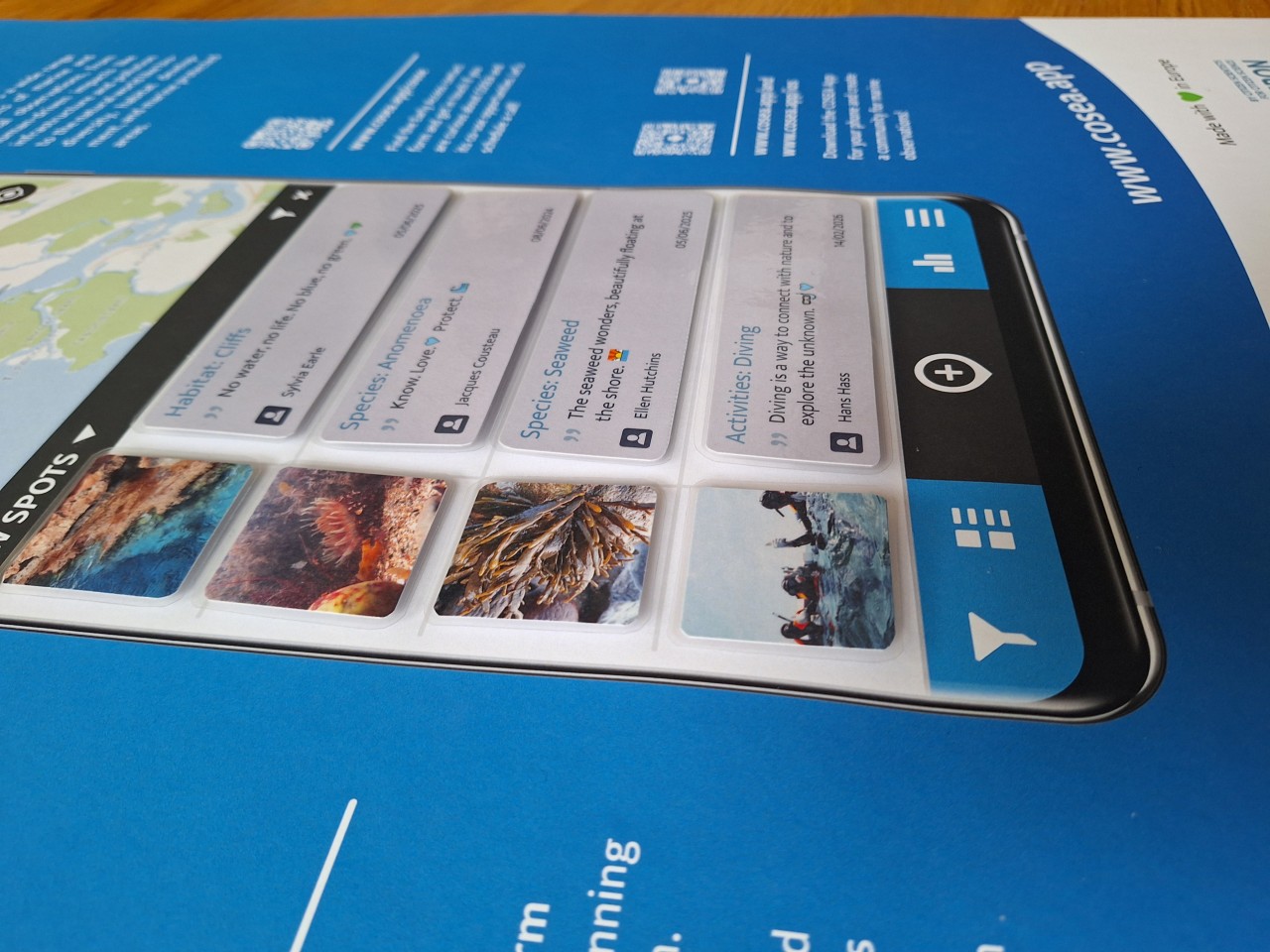
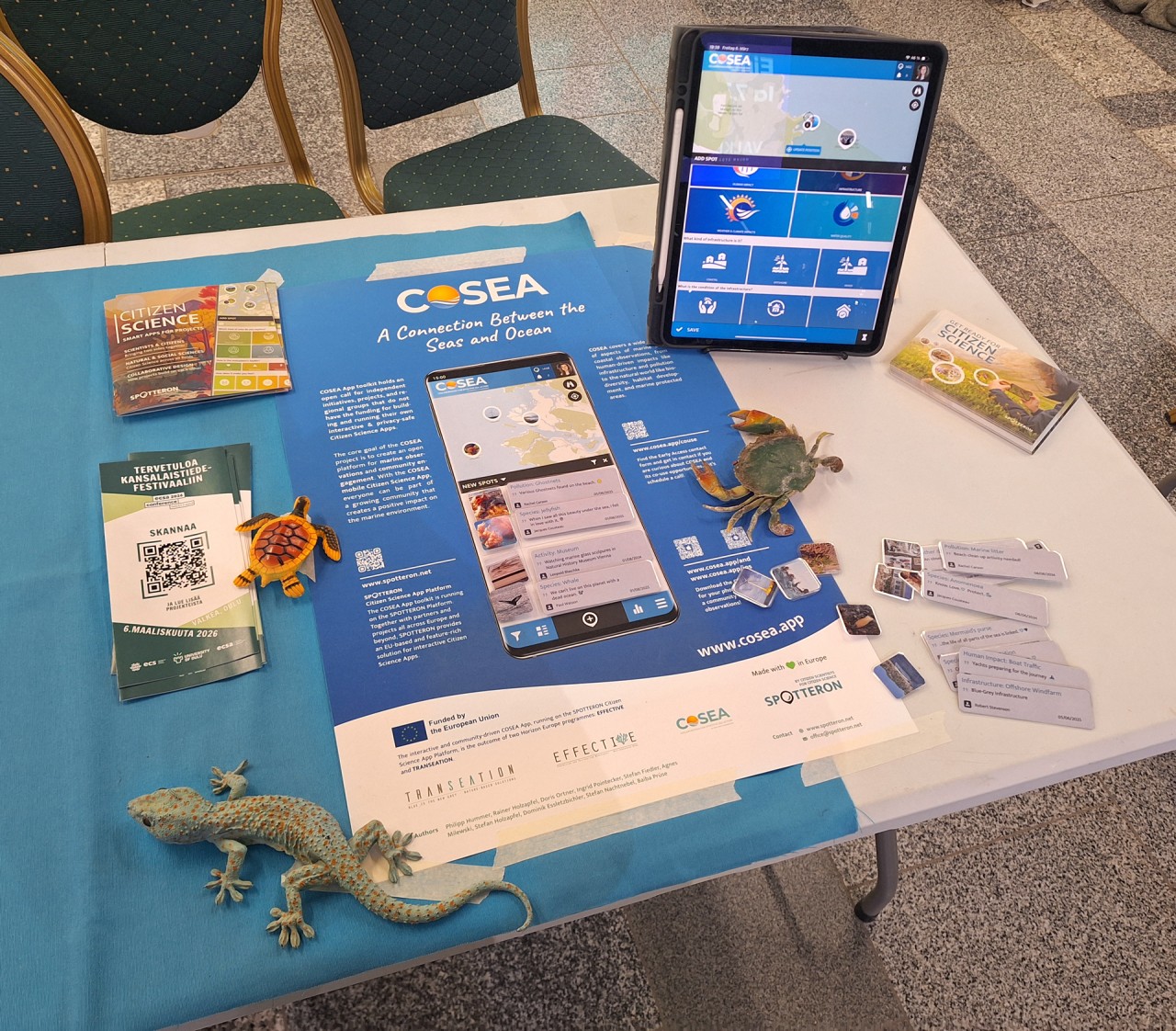
The first was an interactive poster about the community-based COSEA App, a Citizen Science application for marine and coastal observations. The App runs on the SPOTTERON Citizen Science App Platform and is the result of two Horizon Europe projects: EFFECTIVE and TRANSEATION. The COSEA App toolkit holds an open call for independent initiatives, projects and regional groups, who do not have the funding for building and running their own interactive and privacy-safe Citizen Science Apps.
Visitors could actively engage with the poster by adding observations from the App, exploring its categories in a hands-on way. We met highly interested researchers eager to collaborate on COSEA, as well as others who appreciated the Co-Use opportunity and shared it within their networks.
Our second poster visualized the Co-Use Program and collaborative approaches to Citizen Science App development. The ECSA Conference 2026 provided the perfect setting to introduce this new extension of the SPOTTERON Citizen Science App Platform, for enabling collaborative technical possibilities within the Citizen Science community.
Citizen Science Festival – Valkea Shopping Mall
On Friday evening, the conference concluded with the Citizen Science Festival at Valkea Shopping Mall in Oulu, where we presented our projects to the local public alongside a range of other inspiring initiatives. We had engaging conversations with a diverse group of visitors, including children, young people, and older residents, creating meaningful moments of exchange.
While many attendees were conference participants, the event still offered valuable opportunities to connect with the local community. Given that Citizen Scientists were somewhat underrepresented at the conference, this highlighted both the importance and the potential of strengthening such outreach efforts.
Overall, the festival provided useful insights into how science can be brought closer to local audiences. It served as a strong foundation to build on, and with some thoughtful adjustments, future events, such as the next Citizen Science Festival at ECSA conference in Lisbon, have great potential to deepen community engagement even further.
Our Conclusion on ECSA Conference 2026
Although we were not able to attend every session, we noticed that projects often spoke only marginally about how they actually engage with Citizen Scientists in practice. How do you establish contact? What challenges arise? What kinds of relationships develop?
For Lisbon, we would love to see more focus on these aspects — on the interactions, connections, and relationships between researchers and Citizen Scientists. In our view, this is both one of the most challenging aspects of Citizen Science and also its very essence, so we would be very interested to hear and discuss more on this topic in presentations and workshops.
Overall, ECSA Conference 2026 was an incredibly inspiring gathering: excellently organized, with a welcoming atmosphere, wonderful people, and a strong sense of community—all set against a beautiful winter landscape.
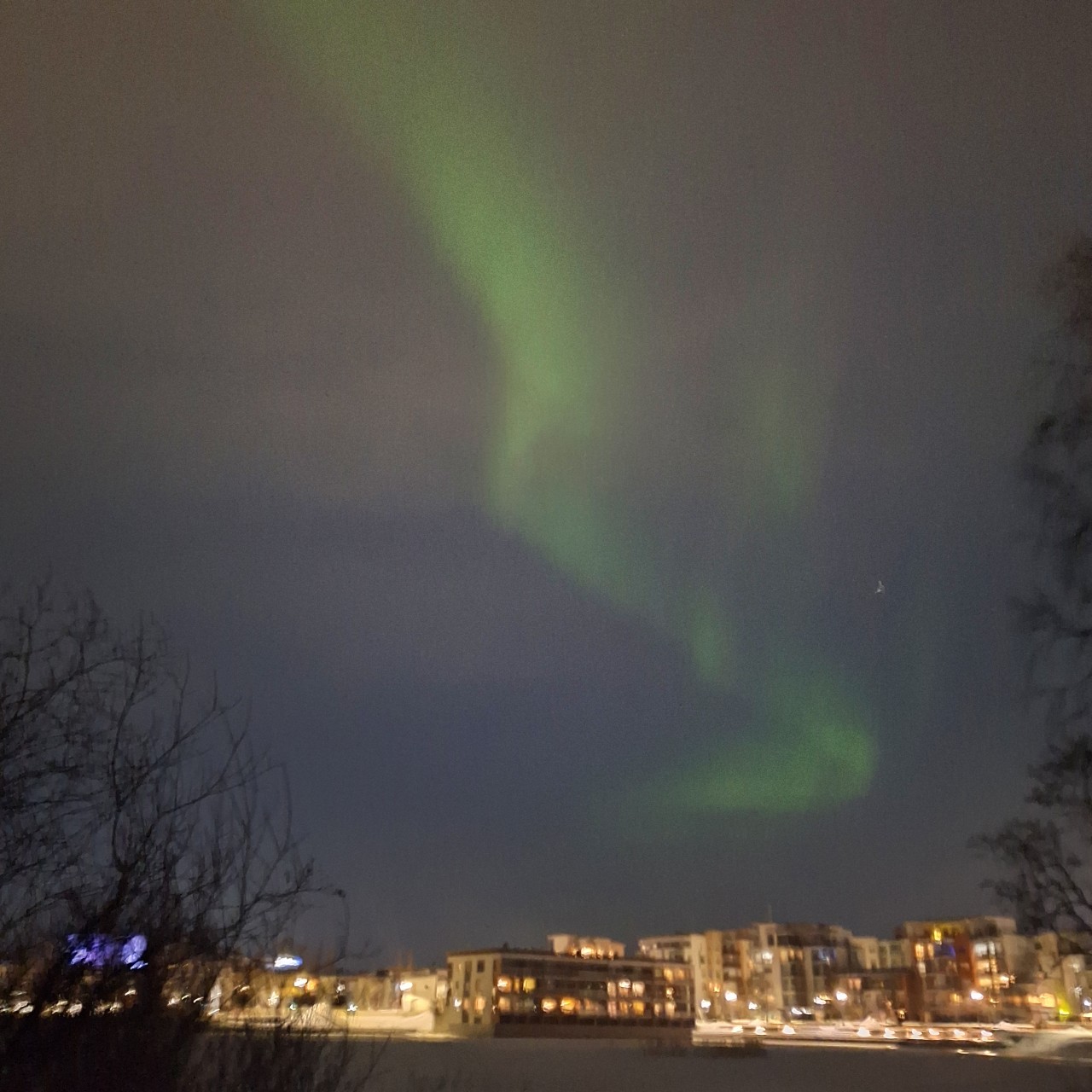
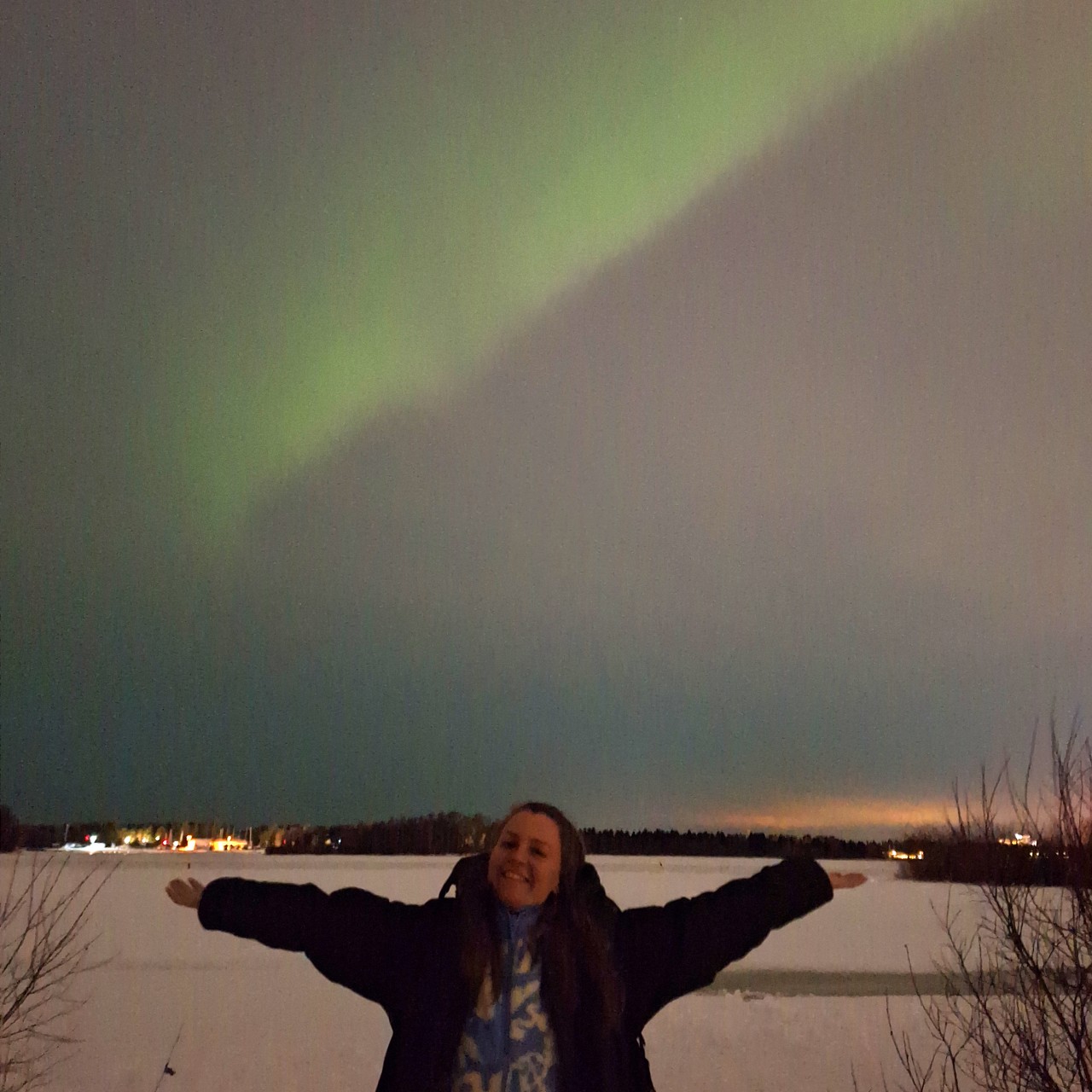
Just before our departure, the northern lights appeared to say goodbye. Now we are looking forward to what will likely be the hottest ECSA Conference ever in Lisbon 2028!
Thank you to all the people we met and connected with, for the great conversations and joyful moments, and especially to the organizers for this truly wonderful conference in Oulu. It was really cool. (And not even that cold.)
Interested to get in contact or collaborate with us? Write an email to This email address is being protected from spambots. You need JavaScript enabled to view it. or contact us here: