Citizen Science Interview I - Johannes Frauscher, Global 2000

Monday, 15 April 2019 18:51

Today marks the release day for our Citizen Science interview series! Continuously we are going to publish interviews with different head of projects running on the SPOTTERON Platform.

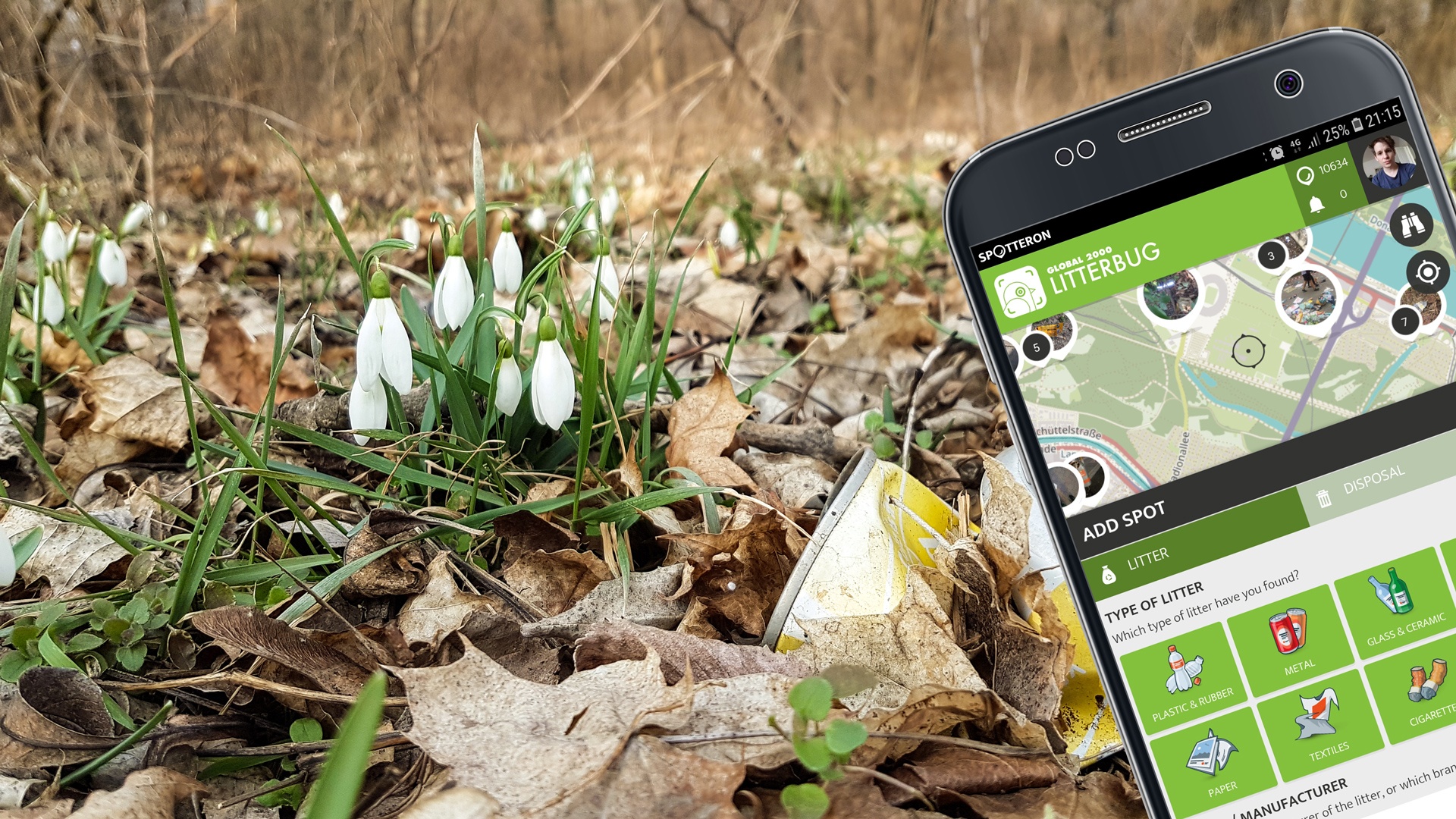
 We start today with an interview of Johannes (Global 2000, DreckSpotz App). Download the App here`:. (https://www.global2000.at/dreckspotz)

1. If you’d have to explain “Citizen Science” to a complete stranger on the street, who never heard anything about it, how would you explain it to him/her?

Citizen Science is participative science. Which means, that everybody can participate and share their experiences of their daily life. For example, if somebody has a thermometer installed in the garden and sends the data to the ZAMG, he/she is already participating in a Citizen Science project.

2. In your opinion, how significant are Citizen Science Projects for science?

I’ll answer this question from my point of view (NGO). In every case, Citizen Science is significant for Science nowadays. It is a useful tool to inform society about ongoing projects, to raise the public interest and to motivate citizens to participate in science projects. Citizen Science can be a perfect tool for building awareness.

3. Take a look back to the very beginning of your project. How did Citizen Science changed since then?

In general, the acceptance of Citizen Science has risen. In our project the number of users increased, which is a positive development. Also in the future, we are going to include more Citizen Science in our work as NGO.

4. What are you doing to increase the range of your Citizen Science Project?

The Littering App is running for 2 ½ years now and we have always worked together with partners, as for example the Austrian “Alpenverein”. At the moment we are looking for some new project partners.

Also, the DreckSpotz App is part of the Citizen Science Award 2019 program from April to July 2019. Many schools in Austria are participating in the contest. The fact that the students might win the prices of 1750€ to, increase their motivation. I think this is a big step.

5. How can the quality of the collected data being secured? And how is your project dealing with the collected data?

After we filtered the collected data (unrealistic entries and wrong geo-data are deleted) the experts of the E.C.O. Institute of Ecology are going through the data. After this step, the data of the DreckSpotz App has been published in the Austrian “Littering in the Nature” paper in autumn 2018. I think in every Citizen Science project it is important to know the limits of the collected data.

6. In Citizen Science projects the community, the motivation of each user and the communication between users play a big role. In your opinion, how important is a well working community for Citizen Science projects?

Very important, but always depending on the project. There are Citizen Science projects in which a functional community is essential for the success of a project while in others it is just secondary. In the littering project it is possible to reach our goals without an interacting community. But still we have noticed that an active community might increase the motivation of our users. In our project we have a group of some very active users. They are using the app frequently and exchange opinions about their discoveries. In any case, projects should foster an active community in their tools if possible.

7. Why do you think Citizen Science is so important and should be supported?

At this point I’d like to refer myself to my answer to the second question you have asked me.

8. When you think about the future of Citizen Science, where do you see Citizen Science in 10 years? How does Citizen Science has to change and adjust?

In anycase, Citizen Science has a big potential in every circumstance of life, far beyond my work at the NGO. The more the world becomes connected, the more potential is there. But I also think, that with the globalisation and the connection of the world, the risk is increasing, which means that Citizen Science has far more responsibility than in the past. The  protection of personal data of the users is also to be considered here. I think that Citizen Science is stipulated in that area, especially if the data is of a sensitive kind. Because Citizen Science is quite young, the community should take a close watch on that.

We would like to thank Johannes Frauscher for the interview!

Example Horizon Europe / Horizon 2020 Collaborations

App Icon
Horizon 2020 Invasive Species Monitoring App

The IPM-Popillia Horizon 2020 project aims to address the challenge of a new risk to plant health in Europe's agriculture and food safety: the invasion of the Japanese Beetle, Popillia japonica. This invasive species was introduced accidentally to mainland Europe in 2014 and can quickly spread by transportation and trade. As a species with a wide range of feeding plants, P. japonica threatens the entire agricultural sector, urban landscapes, and biodiversity in invaded areas.

Learn more about
IPM Popillia | Integrated Pest Management of the Japanese Beetle
App Icon
Horizon Europe Citizen Science App

EFFECTIVE, a Horizon Europe initiative, targets the emerging threat to the EU's Mediterranean Blue Natural Capital. By leveraging advanced science, technological nature-based solutions, digitalization, and social implication, the project aims to develop a comprehensive scientific knowledge base and practical guidance for the application of Ecosystem-Based Management to promote large-scale marine protected areas establishment in the European seas.

Learn more about
EFFECTIVE | Protection and Restoration Management of Mediterranean Marine Protected Areas
App Icon
Horizon Europe Citizen Science App

TRANSEATION, funded by Horizon Europe, aims to validate a new level of ecosystem-based management by integrating social implication digitalization and nature-based solutions to safeguard and restore marine ecosystem health and services. The project focuses on demonstrating the effectiveness of marine and coastal hybrid blue-grey infrastructures and developing digital tools for monitoring, analysis, and social involvement, addressing societal challenges and promoting sustainable management practices.

Learn more about
TRANSEATION | Advancements through Hybrid Blue-Grey Infrastructures in Marine and Coastal Areas
App Icon
Horizon 2020 Citizen Social Science App

In Europe and globally, substantial numbers of young people are at risk of social exclusion. Therefore, there is a pressing need to develop more knowledge and innovation to create inclusive and youth-friendly societies. The Horizon 2020 R&I Project YouCount contributes to these needs by developing 'actionable' knowledge for social inclusion of disadvantaged youths in the European Union and creating better means for social inclusion through citizen social science.

Learn more about
YouCount | Youth Citizen Science
App Icon
Horizon 2020 Citizen Science App

The impact of plastic pollution on soil health is largely unknown. However, the amounts of plastic entering soils are equal to or possibly even more significant than those entering our rivers, seas, and oceans. MINAGRIS, an EU Horizon 2020 funded project, will investigate how plastic affects soil biodiversity, soil functions, associated ecosystem services, and agricultural productivity.
Learn more about
MINAGRIS | Micro and Nanoplastics in Agricultural Soils
App Icon
Health Citizen Science App
University Medical Center Schleswig-Holstein, Kiel University Institute of Medical Psychology and Medical Sociology

StreetMind contributes to a better understanding how environmental factors like urbanicity or climate change influence how individuals across Europe and the world feel, act, and behave. Participants make up their minds with fellow citizens and scientists and share their daily experiences of their surroundings and the environment where they live, work, and interact.

Learn more about
StreetMind

Short News

  • New study from BiciZen project: "BiciZen: Lessons in the Development of a Crowdsourcing Mobile App to Make Cities More Bikeable" published in Journal of Participatory Research Methods. More studies available under the publication page here.

    in Shortnews
  • Roadkill project has made wonderful short videos for the citizen scientists! The videos include the Roadkill App functions regarding how to confirm & comment on the spots and how to best take the photos for the project. The videos (in German) are available in the "Österreich forscht" blog here. 

    in Shortnews

Newsletter

Please enable the javascript to submit this form