Desktop vs. Mobile - What's best for Citizen Science Projects?

Tuesday, 05 November 2019 15:07

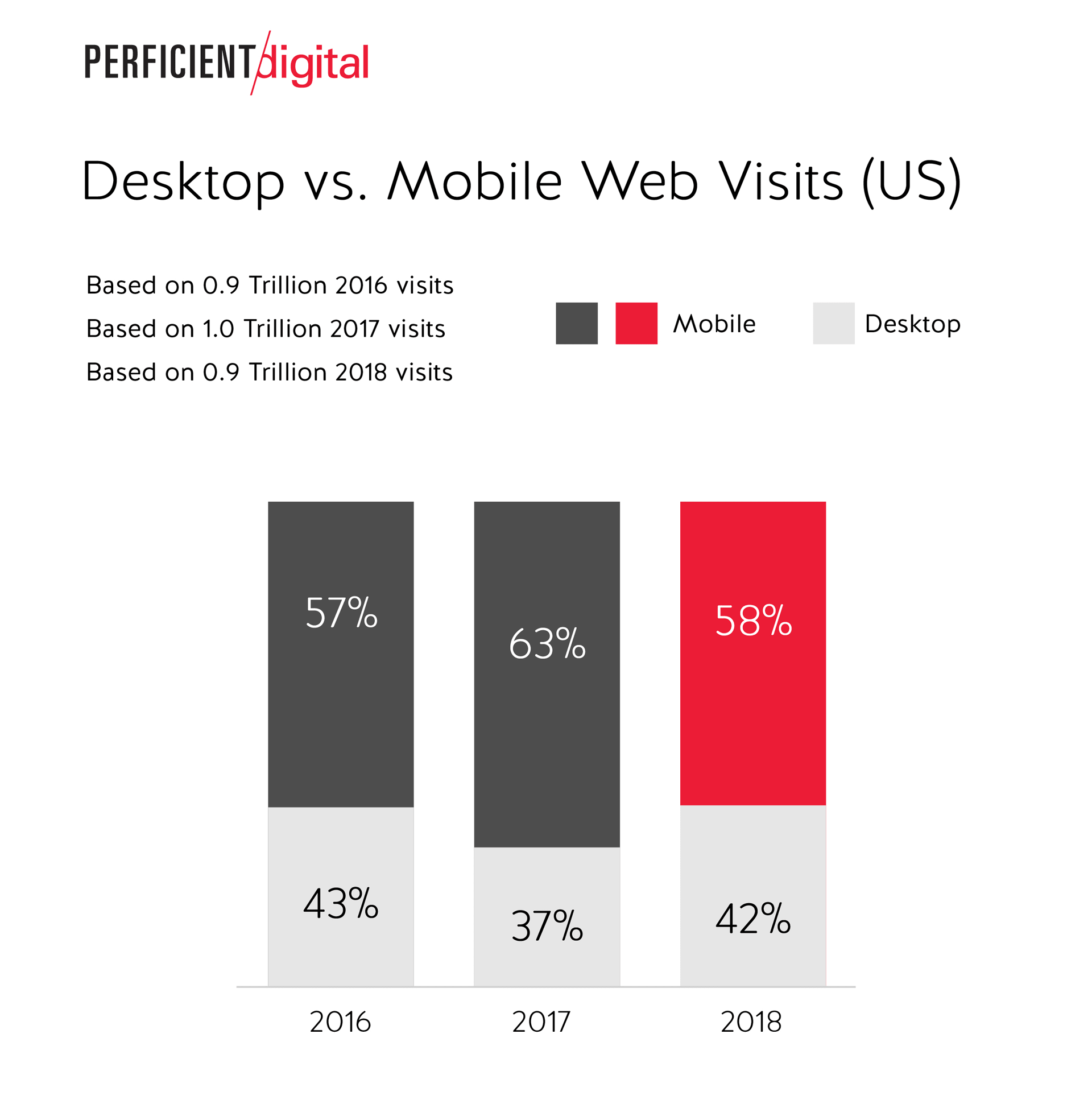
An analysis of the state of the mobile web conducted by SimilarWeb earlier this year presented on Perficient Digital digital marketing agency has shown that usage of the mobile internet vs the desktop went down compared to 2017 but is still higher than in 2016.

  • In 2018, 58% of site visits were from mobile devices.
  • Mobile devices made up 42% of total time spent online.
  • Mobile bounce rate came in at 50%

mobile vs desktop

Does mobile traffic really decline?

The apparent decline is not an actual drop in mobile usage but rather a change in the data collection methodology for 2018, for which different data sources have been used.
In fact, the data suggests that the majority of traffic (58%) now comes from mobile devices, even though the average time spent on a website is slightly higher on desktops in general. This is a critical fact of life for business and media websites.
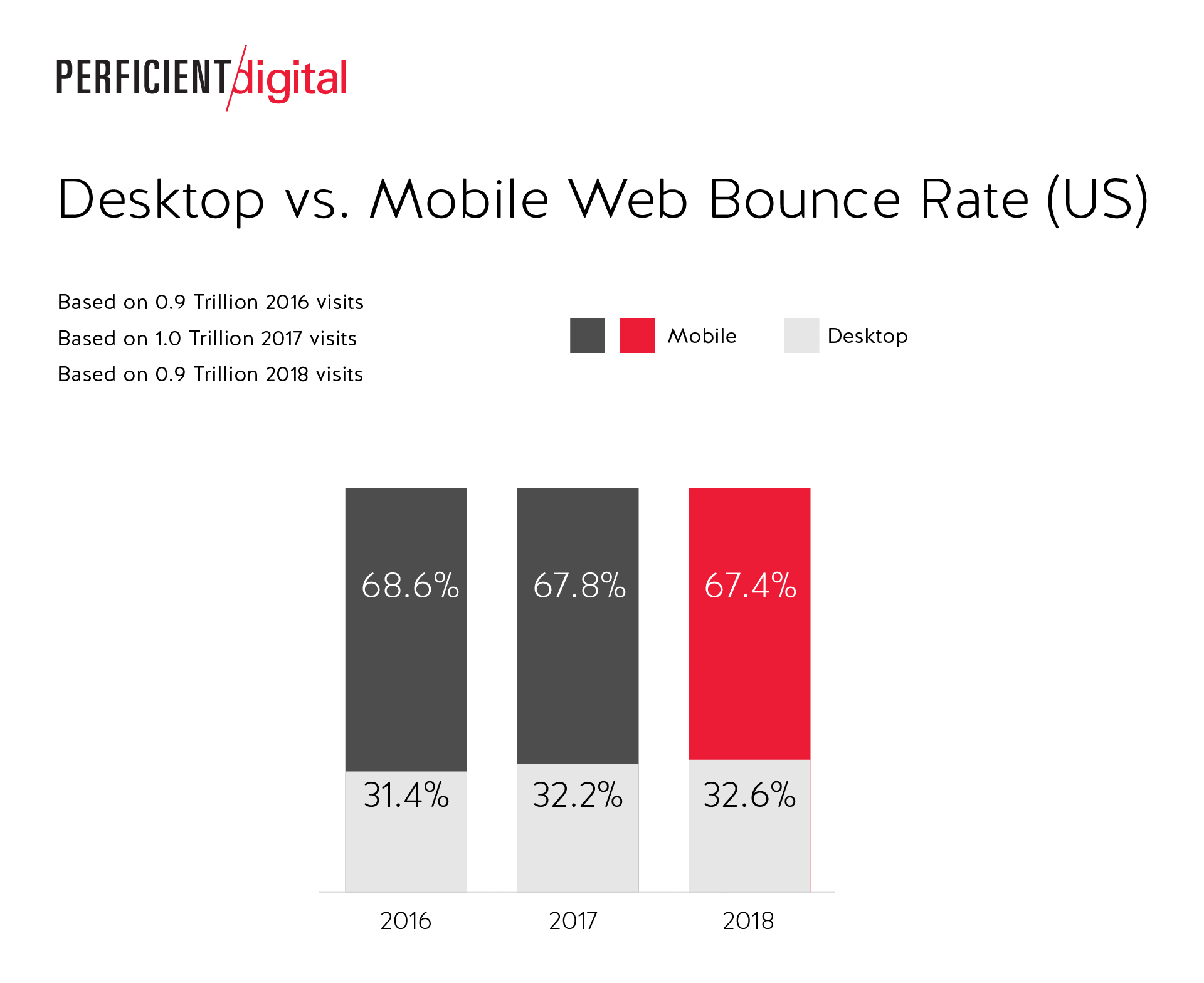
When it comes to bounce rates, desktop still has the lead over mobile, and that is not likely to change anytime soon even though mobile site experiences are improving and users are getting more comfortable with them. The data also suggests that this occurs because users often look up things quickly while they are on the go.
bouncerate

What is most interesting though is the fact that compared to other industry categories, science has the highest bounce rate on mobile devices of all.
Bounce rate is an Internet marketing term used in web traffic analysis. It represents the percentage of visitors who enter the site and then leave rather than continuing to view other pages within the same site.
The data suggests that science-related apps and websites have the highest bounce rate on mobile devices of all.

On SPOTTERON, we provide high quality-visuals to counteract that and apply modern principles of design to every interactive project and Citizen Science app. Visual quality matters, its the first impression and the message conveyed which counts in terms of bounce rates.
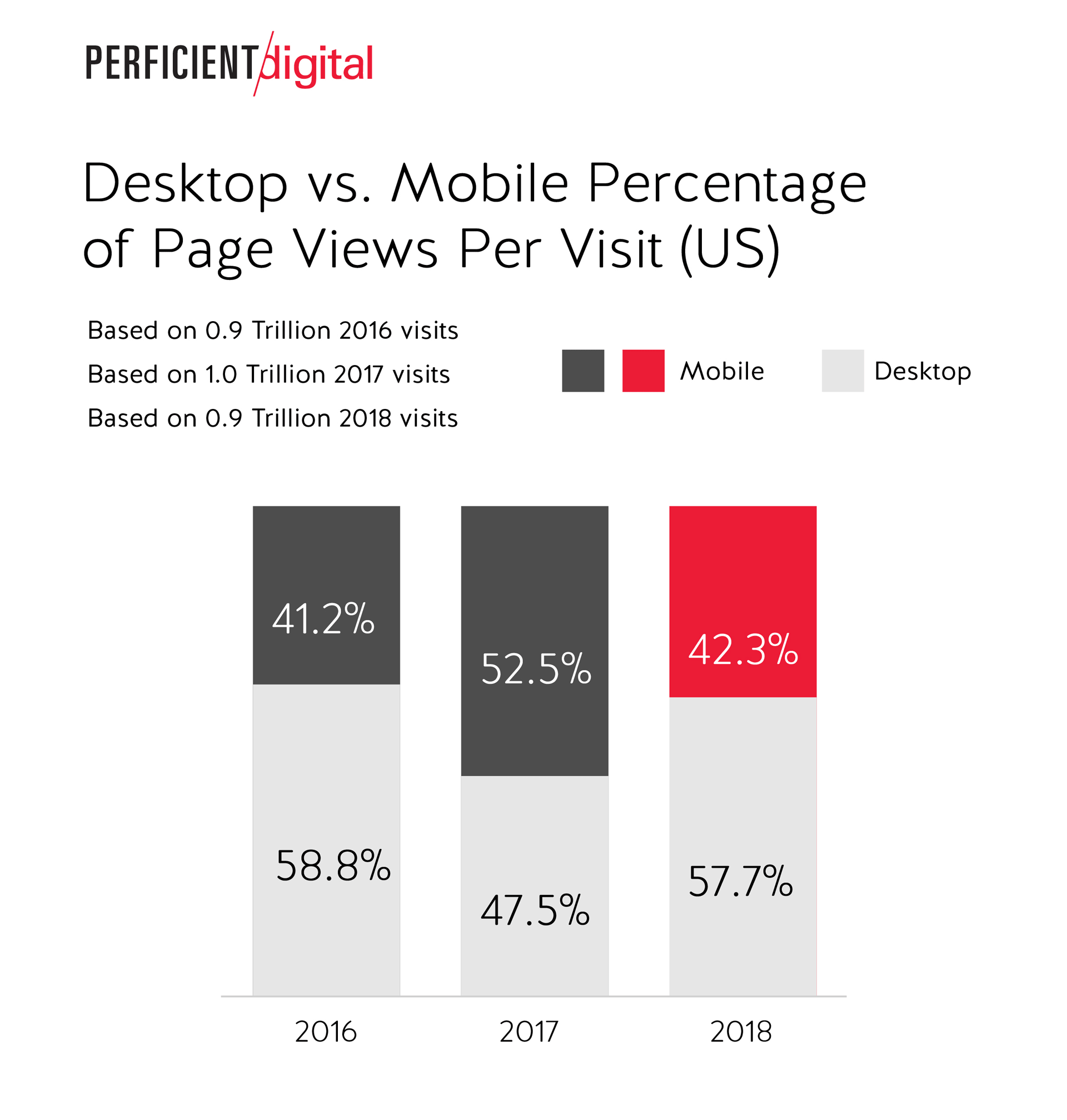
Generally speaking, the percentage of total page views from mobile devices vs desktop is slightly higher compared to previous years, suggesting a continuation of that trend:
page views per visit 

What do the numbers mean for citizen science projects?

First of all, a well crafted online presence for any (citizen) science project is crucial, both mobile and desktop. Keeping in mind how the usage of mobile devices continues to grow compared to desktop and how the mobile experience continues to improve, interactive citizen science apps are an integral part of any project and will become even more significant in the future. Being mobile friendly is important in all industries — it's the largest source of traffic in nearly all of them.

That's why on the SPOTTERON citizen platform every projects toolkit is not only available as a smartphone app for android and iOS, but also as a full feature interactive web-app for the browser. This web-aplication can be embedded directly in the project's homepage and be used by every citizen scientist, school class or organisation, for contribitung on laptops and desktop PC's.

Image Sources: https://www.perficientdigital.com/insights/our-research/mobile-vs-desktop-usage-study


Example Horizon Europe / Horizon 2020 Collaborations

App Icon
Horizon 2020 Invasive Species Monitoring App

The IPM-Popillia Horizon 2020 project aims to address the challenge of a new risk to plant health in Europe's agriculture and food safety: the invasion of the Japanese Beetle, Popillia japonica. This invasive species was introduced accidentally to mainland Europe in 2014 and can quickly spread by transportation and trade. As a species with a wide range of feeding plants, P. japonica threatens the entire agricultural sector, urban landscapes, and biodiversity in invaded areas.

Learn more about
IPM Popillia | Integrated Pest Management of the Japanese Beetle
App Icon
Horizon Europe Citizen Science App

EFFECTIVE, a Horizon Europe initiative, targets the emerging threat to the EU's Mediterranean Blue Natural Capital. By leveraging advanced science, technological nature-based solutions, digitalization, and social implication, the project aims to develop a comprehensive scientific knowledge base and practical guidance for the application of Ecosystem-Based Management to promote large-scale marine protected areas establishment in the European seas.

Learn more about
EFFECTIVE | Protection and Restoration Management of Mediterranean Marine Protected Areas
App Icon
Horizon Europe Citizen Science App

TRANSEATION, funded by Horizon Europe, aims to validate a new level of ecosystem-based management by integrating social implication digitalization and nature-based solutions to safeguard and restore marine ecosystem health and services. The project focuses on demonstrating the effectiveness of marine and coastal hybrid blue-grey infrastructures and developing digital tools for monitoring, analysis, and social involvement, addressing societal challenges and promoting sustainable management practices.

Learn more about
TRANSEATION | Advancements through Hybrid Blue-Grey Infrastructures in Marine and Coastal Areas
App Icon
Horizon 2020 Citizen Social Science App

In Europe and globally, substantial numbers of young people are at risk of social exclusion. Therefore, there is a pressing need to develop more knowledge and innovation to create inclusive and youth-friendly societies. The Horizon 2020 R&I Project YouCount contributes to these needs by developing 'actionable' knowledge for social inclusion of disadvantaged youths in the European Union and creating better means for social inclusion through citizen social science.

Learn more about
YouCount | Youth Citizen Science
App Icon
Horizon 2020 Citizen Science App

The impact of plastic pollution on soil health is largely unknown. However, the amounts of plastic entering soils are equal to or possibly even more significant than those entering our rivers, seas, and oceans. MINAGRIS, an EU Horizon 2020 funded project, will investigate how plastic affects soil biodiversity, soil functions, associated ecosystem services, and agricultural productivity.
Learn more about
MINAGRIS | Micro and Nanoplastics in Agricultural Soils
App Icon
Health Citizen Science App
University Medical Center Schleswig-Holstein, Kiel University Institute of Medical Psychology and Medical Sociology

StreetMind contributes to a better understanding how environmental factors like urbanicity or climate change influence how individuals across Europe and the world feel, act, and behave. Participants make up their minds with fellow citizens and scientists and share their daily experiences of their surroundings and the environment where they live, work, and interact.

Learn more about
StreetMind

Short News

  • New study from BiciZen project: "BiciZen: Lessons in the Development of a Crowdsourcing Mobile App to Make Cities More Bikeable" published in Journal of Participatory Research Methods. More studies available under the publication page here.

    in Shortnews
  • Roadkill project has made wonderful short videos for the citizen scientists! The videos include the Roadkill App functions regarding how to confirm & comment on the spots and how to best take the photos for the project. The videos (in German) are available in the "Österreich forscht" blog here. 

    in Shortnews

Newsletter

Please enable the javascript to submit this form