Two new features: Top Spots & Meta-Infos

We recently added two new feature to SPOTTERONs ever extending 'feature ecosystem'. The two most recent additions 'Top Spots' and 'Meta-Infos' can enhance better data quality and more..
Top Spots: One feature, many advantages
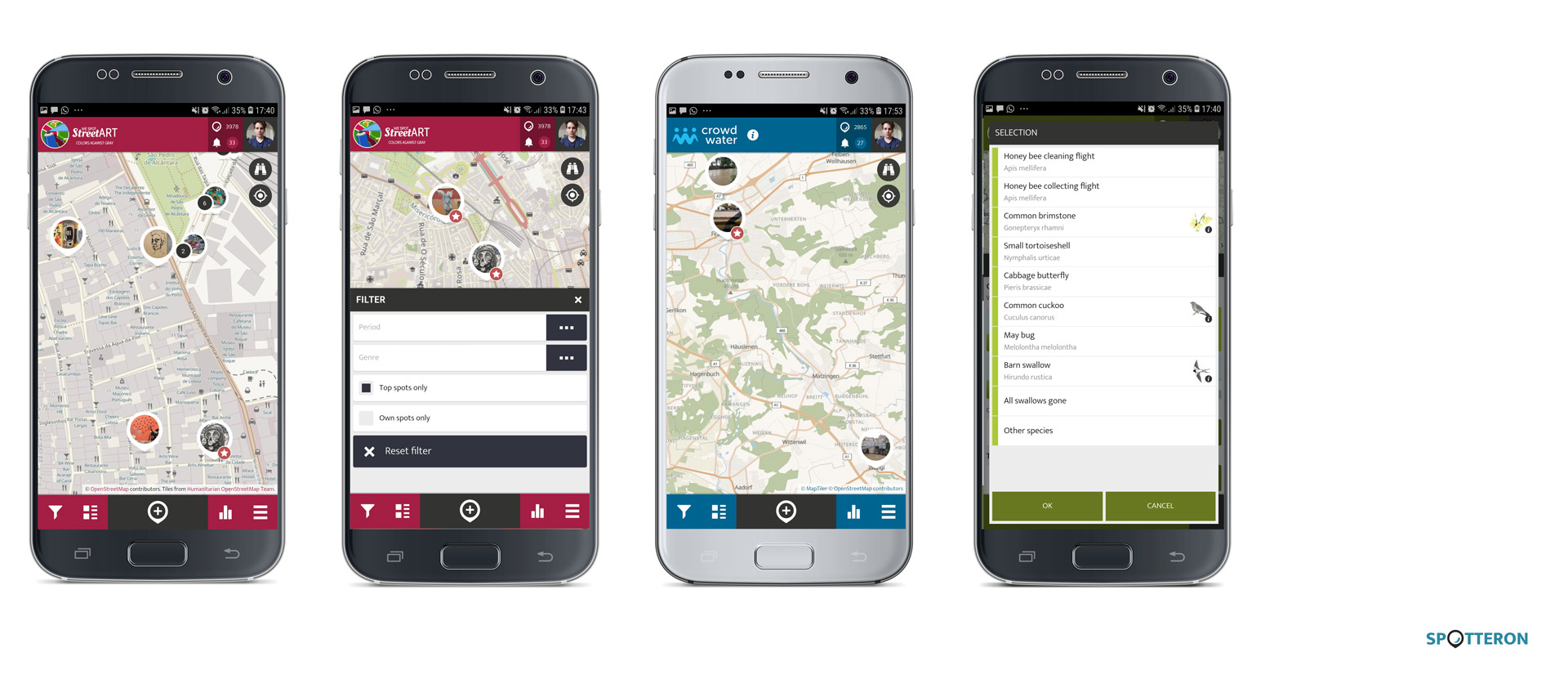
Project administrators can now mark any spot as a so-called 'Top Spot' in the administration interface. This leads to a star appearing by the spot marker or a custom designed icon in the project's apps in realtime. The 'Top Spot' feature can be used in different of ways according to the project's needs.
For example they can be used as tools to enhance longterm user motivation and to support better data quality of submissions. When Citizen Scientists contribute high quality data, flagging their spot as a 'Top Spot' can be used as a sign of recognition and reward, thereby giving them a positive feedback in a very easy and time efficient way. This will likely boost their motivation and can also give them a better understanding of how to collect spots with a high data quality. Because the 'Top Spot' icon can be seen by all Citizen Scientists in the project, it also shows the entire community examples of especially valuable data.
But these two positive effects are not the not the only ways to make use of this feature. In case a project collects data on a certain development over time, 'Top Spots' can also function to highlight, where an update may be especially valuable and/or needed. This way Citizen Scientists can be informed and encouraged to add a valuable piece of data to the project.
Meta information: latin species names, other languages, numerous possibilities
The Meta-Infos are displayed directly in the selection lists of project apps to provide valuable information to Citizen Scientists when recording their observation. They are displayed in smallerer letters below the main selection name can be a latin species name for example, but also a different name or whatever can be phrased in two to three words. This way you can also integrate a way for your Citizen scientists to learn something or better define their observation.
About the author

By accepting you will be accessing a service provided by a third-party external to https://www.spotteron.net/