SPOTTERON
Multilingualism in Citizen Science Projects

When developing Citizen Science Apps, the usability has a big impact on how well and frequent people use them in the end. The goal for Citizen Science Apps is to become an important part in the everyday lives of their users in the long term, so that users can gain experience and can contribute important data to scientific projects.
Landauf, LandApp BW

Landauf, LandApp BW is an interactive data collection project by LEO BW and the National Archive of Baden-Würtemberg in Germany, EU. The Citizen Science App is focused on contributions about landmarks and historical buildings in the area. The project is including local communities and gather their knowledge about their own regions.
Day of Phenology 2019
On Wednesday, the 6th of March, the first "Day of Phenology" took place at the ZAMG in Vienna. We have been invited by one of our project partners from the "Naturkalender App". Read more about it in our Citizen Science blog!
Day of Phenology at the ZAMG Vienna
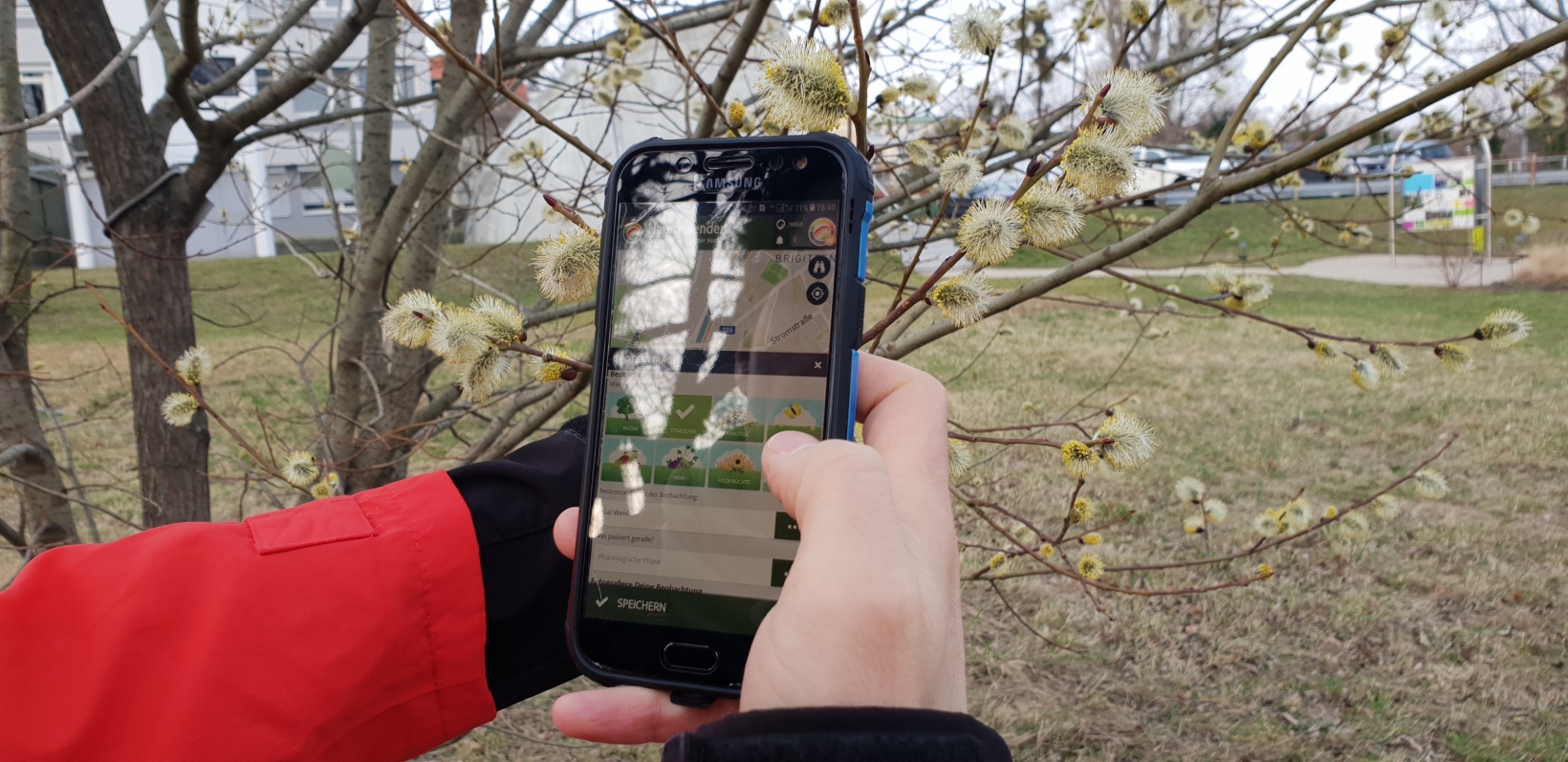
On Wednesday, the 6th of March, the first "Day of Phenology" took place at the ZAMG in Vienna. We have also been invited by one of our project partners from the "Naturkalender App".
#CitSci2019 Special Feature - get your Citizen Science apps 50% off

Currently, the #CitSci2019 conference in Raleigh, NC is going on and we follow the workshops, sessions and comments via twitter from our SPOTTERON Citizen Science design office in Vienna, Europe. But since we always love to support Citizen Science, we decided spontanously to do another special for one project of any participant or group at the conference.
Citizen Science in the gis.Business Magazine: Knowledge in the Hands of Citizens
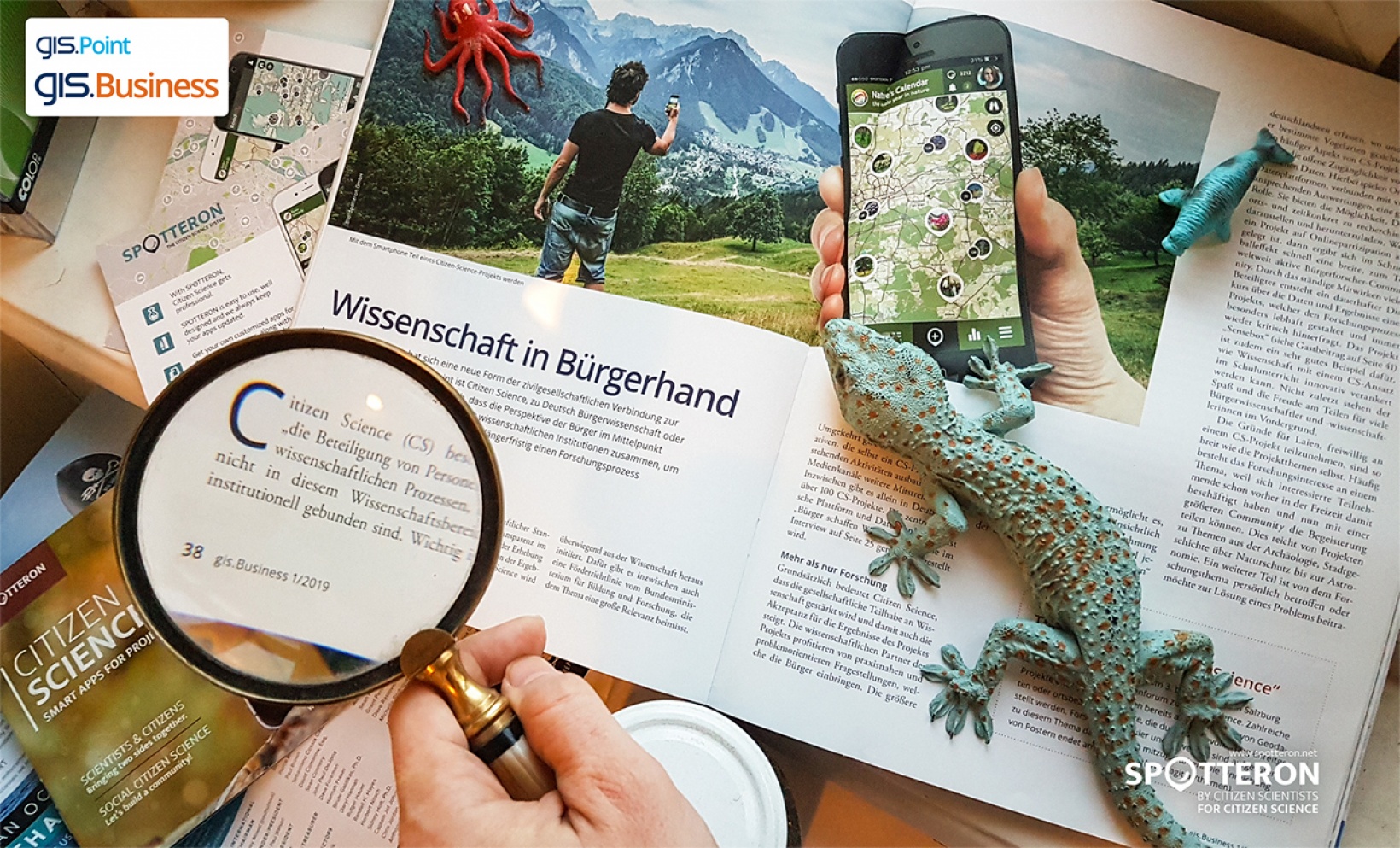
We are very happy to be featured in the new Citizen Sience 4.0 article by Maximilian Ueberham in the gis.Business magazine (Ausgabe 01/2019). After a short introduction about Citizen Science author Maximilian Ueberham presents Citizen Sience projects, including the SPOTTERON Citizen Science platform.
New Partnerlogos
We are happy to welcome our new partners, from universities to stakeholders in citizen science! On our website partner section you can now find a short description of their facilities and research.
The House of Science
The House of Science is a leading resource of inspiration and knowledge in Stockholm. House of Science is an educational center initiated in 2001 as a collaboration between KTH Royal Institute of Technology and Stockholm University, which has about 80 000 visitors by year. Since its inception, the main goal has been to increase young peoples´ interest and knowledge in STEM subjects (science, technology, engineering and mathematics) in an exiting environment using relevant themes and age-appropriate hands-on activities.
Umevatoriet
The aim of Umevatoriet is to promote science, technology and mathematics through a collaboration between the school administrations of Umeå municipality and its neighbouring districts, Umeå University and the local industry. Together we create activities that gives the opportunity for both pupils and their teachers to perform experiments and deepen their knowledge and experiences in science, technology and mathematics. The starting-point for our themes is usually space and from there our visitors are led towards various areas, depending on their age and background.
The Swedish Astronomical Society

The Swedish Astronomical Society (Svenska astronomiska sällskapet) is a national organization in Sweden aimed at people who want to follow the achievements of astronomical research. Founded in 1919, the society has from the outset intended to be "an intimate connection between scientists, amateur astronomers, and others interested in astronomy".
"Popular Astronomy" is the association's member magazine. "Astronomical Youth" is the society's Youth League.