Citizen Science and the importance of hashtags

Monday, 17 February 2020 17:35

In today's fast and everchanging world, it can seem tedious to syphon through the haze of information to find the relevant one. A quick search on Google is undoubtedly a good thing, but what if you need the information to be verified as quickly, as possible?
Many users will turn to social media to do that. Why? Because on Twitter, you can find news in real-time. Without much effort, you can verify a piece of information in an instant.

This is possible with the invention of hashtags.

The blue-coloured keywords that appear on Twitter, Instagram, Facebook and others with the octothorpe or pound symbol (#) before them were invented in 2007. They were meant to be a kind of metadata-tag to categorize information and enable users to faster navigate through social media sites such as Twitter, and quickly became an integral part of any social media post.

How to use a hashtag, and why?

According to hashtagify.me and other platforms that offer tools for your social media marketing, there are a few thoughts to consider:

  • Hashtags are great if you're looking for information a specific topic or posts that interest you.
  • By using certain types of hashtags, you can attract more customers, thus making your posts appear in front of search results relevant to your target audience. This is especially useful when you're launching a new Citizen Science project and want as many people as possible to join and participate.
  • Hashtags increase user engagement: There are more than 145 billion active users on Twitter alone. With the right hashtag, you can better connect with your target audience.
    Tweets with hashtags get retweeted more often (55%) than those without any hashtags.
  • With hashtags, you can not only find your target audience (as they can find you!), you can also establish a reputation for your project or brand by grabbing the attention of interested people.
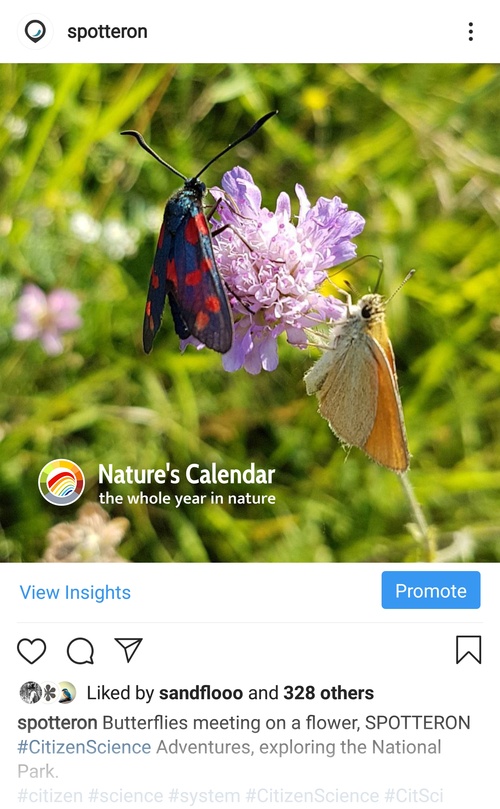
SPOTTERON Hashtags InstagramNatureCalenderA few guidelines on how to use hashtags:

✪ Do your Research

Before you start using hashtags, find out which ones are the right ones for your project/brand.

✪ Use the ones that are easy to remember

Just like a good brand name, the hashtag should be easy to remember and engage as many people as possible.

✪ Careful with the Brand Name!

Using your brand name as a hashtag all the time will put people off. Yes, use it, but not all the time in every single post. Try and find a healthy balance.

✪ Stay relevant, use it consistently on all the platforms.

Obviously, use the hashtags that are relevant to your project/brand.
Also, use the same ones on all the platforms consistently so that people start thinking and talking about your project everywhere.

✪ Avoid over-tagging

Using a #hashtag #after #every #single #word makes the message you're trying to convey difficult to read and hard to remember. 
Keep this advice in mind when disseminating your next Citizen Science project to make it a success!

Sources used:
wikipedia.org
hashtagify.me
https://sproutsocial.com

Projects & Apps open for Co-Use on SPOTTERON

App Icon
Social initiative Data Collection App
SPOTTERON

ArtSpots is a community-built art atlas. Through the App, people interested in various art forms like street art, historical or contemporary art, photography, architecture, and more can put their art observations on the map and discover art spots in their city or while travelling. The art community in the App allows exchanging with other like-minded people and contributing to a worldwide art collection.
Learn more about
ArtSpots
App Icon
Horizon Europe Citizen Science App

With the COSEA App, Citizen Scientists can observe marine environments, document coastal habitats or species, and report on pollution, infrastructure and the blue economy. Their contributions on the map and activity in the app will help scientists better understand the impacts and drivers of marine factors to protect and foster a healthy relationship between humans and seas.

Learn more about
COSEA | Collaboration for Effective Sea Action
App Icon
Environmental Citizen Science, Data Collection App
SPOTTERON

NatureSpots is a non-commercial and free project to discover nature together. In the app, nature photos and sightings of animals, plants or mushrooms can be shared with the community on the map. The app is a new initiative for observing nature and taking part is very simple and straightforward. The app is free of advertising, does not track users and takes digital privacy seriously.

Learn more about
NatureSpots
App Icon
Social initiative Community Engagement App
SPOTTERON

The new citizen participation uses "Citizen Science" in their hometown and nationwide to get User's feedback on places. As a result, citizens are empowered to become active in a city worth living in to collect and share data themselves and to interact with scientists. This enables them to recognize the consequences of sealing, heat, water shortages, and a lack of biodiversity, and generally, how places in their own environment affect us all.

Learn more about
CIVO Citizen Voice
App Icon
Horizon 2020 Invasive Species Monitoring App

The IPM-Popillia Horizon 2020 project aims to address the challenge of a new risk to plant health in Europe's agriculture and food safety: the invasion of the Japanese Beetle, Popillia japonica. This invasive species was introduced accidentally to mainland Europe in 2014 and can quickly spread by transportation and trade. As a species with a wide range of feeding plants, P. japonica threatens the entire agricultural sector, urban landscapes, and biodiversity in invaded areas.

Learn more about
IPM Popillia | Integrated Pest Management of the Japanese Beetle
App Icon
Environmental Community Engagement App

Fridays for Future see itself as a horizontal, grassroots grassroots movement that acts apolitically and refers to science for the facts. To engage the global population more, this app was developed using SPOTTERON. The aim is to find out how the population perceives the climate crisis and which positive and negative emotions are associated with specific topics related to biodiversity and climate crisis.

Learn more about
FRIDAYS FOR FUTURE - Climate App

Are you interested in co-using existing Apps? Get in Contact!

Get in contact for co-use here


Short News

  • New study from BiciZen project: "BiciZen: Lessons in the Development of a Crowdsourcing Mobile App to Make Cities More Bikeable" published in Journal of Participatory Research Methods. More studies available under the publication page here.

    in Shortnews
  • Roadkill project has made wonderful short videos for the citizen scientists! The videos include the Roadkill App functions regarding how to confirm & comment on the spots and how to best take the photos for the project. The videos (in German) are available in the "Österreich forscht" blog here. 

    in Shortnews

Newsletter

Please enable the javascript to submit this form