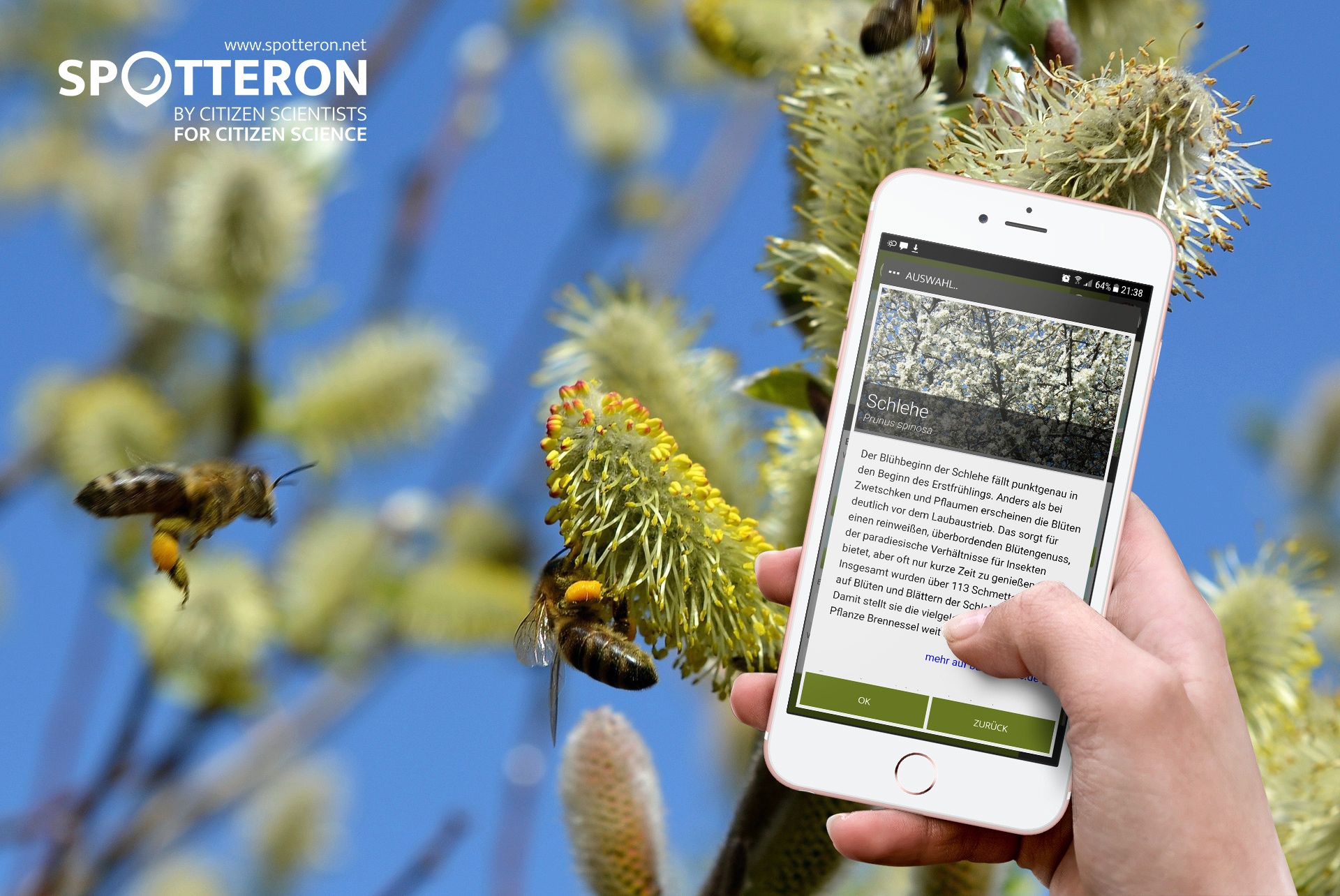
New Infopanel Design: Learning by using Citizen Science Apps

Tuesday, 08 May 2018 21:50

Today we released the SPOTTERON platform update 2.1.4 for all Android and iOS apps and interactive maps. 

As usual, there were a few improvements and and fixes included in the new update. For example, all users can edit the category field now when using the edit mode, thereby it just got a whole lot easier to change small mistakes which might occur accidentally.

But the most exciting new feature we were able to add in the course of the new update sure is the new info panel layout TWO. Therefore, we gave the previously only text-based infopanels a new layout and design. This new layout, as must be in SPOTTERON, is of course adaptle to the project's info layout and can now also include pictures or external links to even more information. 
The Nature's Calendar App already added quite a lot of additional information and pictures, so if you want to see an example of the new infopanels, check it out in the ZAMG's Nature's Calendar Android or iOS apps or through the interactive maps on www.naturkalender.at.
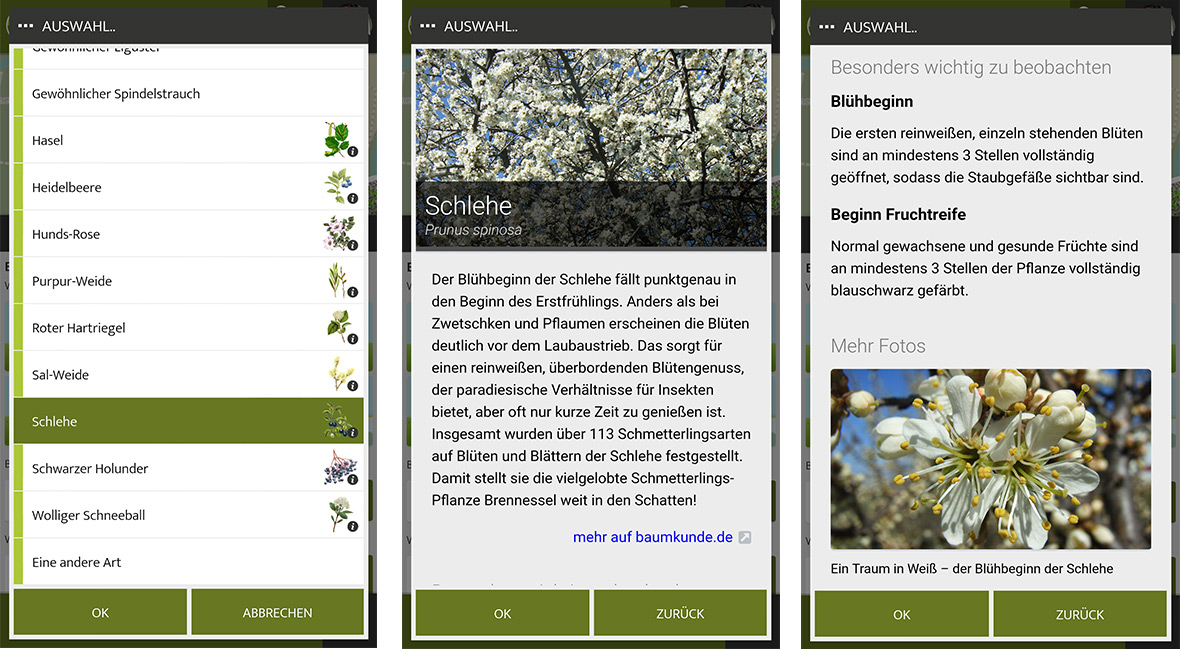
Screenshot of the new information panel design in the Citizen Science apps
(Screenshots of the german Naturkalender Citizen Science App, species: blackthorn)

After choosing the category you can simply click on the small icon pictures with an i (for information) next to it in the list and you will get right to the infopanel. That offers reassurance in case of uncertainties and/or also leads to picking up on new information.
The new pics also support art recognition in our brains, this way the brain doesn't have to go through the entire written list again and process it every time. We took care of humans as visual beings here to appeal preferably simple and easy. Also keeping usability in mind, the info panels offer two options. By clicking ok, the information that was just looked at, is selected for the observation and you can simply continue the questionnaire from there on out. If you click back, you will get back to the list and can choose something else or check out other info panels first. 
This new feature really supports the learning effects of Citizen Science! On the one hand side, it can improve data quality, on the other hand side it allows to give something back to the Citizen Scientists.

Projects & Apps open for Co-Use on SPOTTERON

App Icon
Social initiative Data Collection App
SPOTTERON

ArtSpots is a community-built art atlas. Through the App, people interested in various art forms like street art, historical or contemporary art, photography, architecture, and more can put their art observations on the map and discover art spots in their city or while travelling. The art community in the App allows exchanging with other like-minded people and contributing to a worldwide art collection.
Learn more about
ArtSpots
App Icon
Horizon Europe Citizen Science App

With the COSEA App, Citizen Scientists can observe marine environments, document coastal habitats or species, and report on pollution, infrastructure and the blue economy. Their contributions on the map and activity in the app will help scientists better understand the impacts and drivers of marine factors to protect and foster a healthy relationship between humans and seas.

Learn more about
COSEA | Collaboration for Effective Sea Action
App Icon
Environmental Citizen Science, Data Collection App
SPOTTERON

NatureSpots is a non-commercial and free project to discover nature together. In the app, nature photos and sightings of animals, plants or mushrooms can be shared with the community on the map. The app is a new initiative for observing nature and taking part is very simple and straightforward. The app is free of advertising, does not track users and takes digital privacy seriously.

Learn more about
NatureSpots
App Icon
Social initiative Community Engagement App
SPOTTERON

The new citizen participation uses "Citizen Science" in their hometown and nationwide to get User's feedback on places. As a result, citizens are empowered to become active in a city worth living in to collect and share data themselves and to interact with scientists. This enables them to recognize the consequences of sealing, heat, water shortages, and a lack of biodiversity, and generally, how places in their own environment affect us all.

Learn more about
CIVO Citizen Voice
App Icon
Horizon 2020 Invasive Species Monitoring App

The IPM-Popillia Horizon 2020 project aims to address the challenge of a new risk to plant health in Europe's agriculture and food safety: the invasion of the Japanese Beetle, Popillia japonica. This invasive species was introduced accidentally to mainland Europe in 2014 and can quickly spread by transportation and trade. As a species with a wide range of feeding plants, P. japonica threatens the entire agricultural sector, urban landscapes, and biodiversity in invaded areas.

Learn more about
IPM Popillia | Integrated Pest Management of the Japanese Beetle
App Icon
Environmental Community Engagement App

Fridays for Future see itself as a horizontal, grassroots grassroots movement that acts apolitically and refers to science for the facts. To engage the global population more, this app was developed using SPOTTERON. The aim is to find out how the population perceives the climate crisis and which positive and negative emotions are associated with specific topics related to biodiversity and climate crisis.

Learn more about
FRIDAYS FOR FUTURE - Climate App

Are you interested in co-using existing Apps? Get in Contact!

Get in contact for co-use here


Short News

  • New study from BiciZen project: "BiciZen: Lessons in the Development of a Crowdsourcing Mobile App to Make Cities More Bikeable" published in Journal of Participatory Research Methods. More studies available under the publication page here.

    in Shortnews
  • Roadkill project has made wonderful short videos for the citizen scientists! The videos include the Roadkill App functions regarding how to confirm & comment on the spots and how to best take the photos for the project. The videos (in German) are available in the "Österreich forscht" blog here. 

    in Shortnews

Newsletter

Please enable the javascript to submit this form