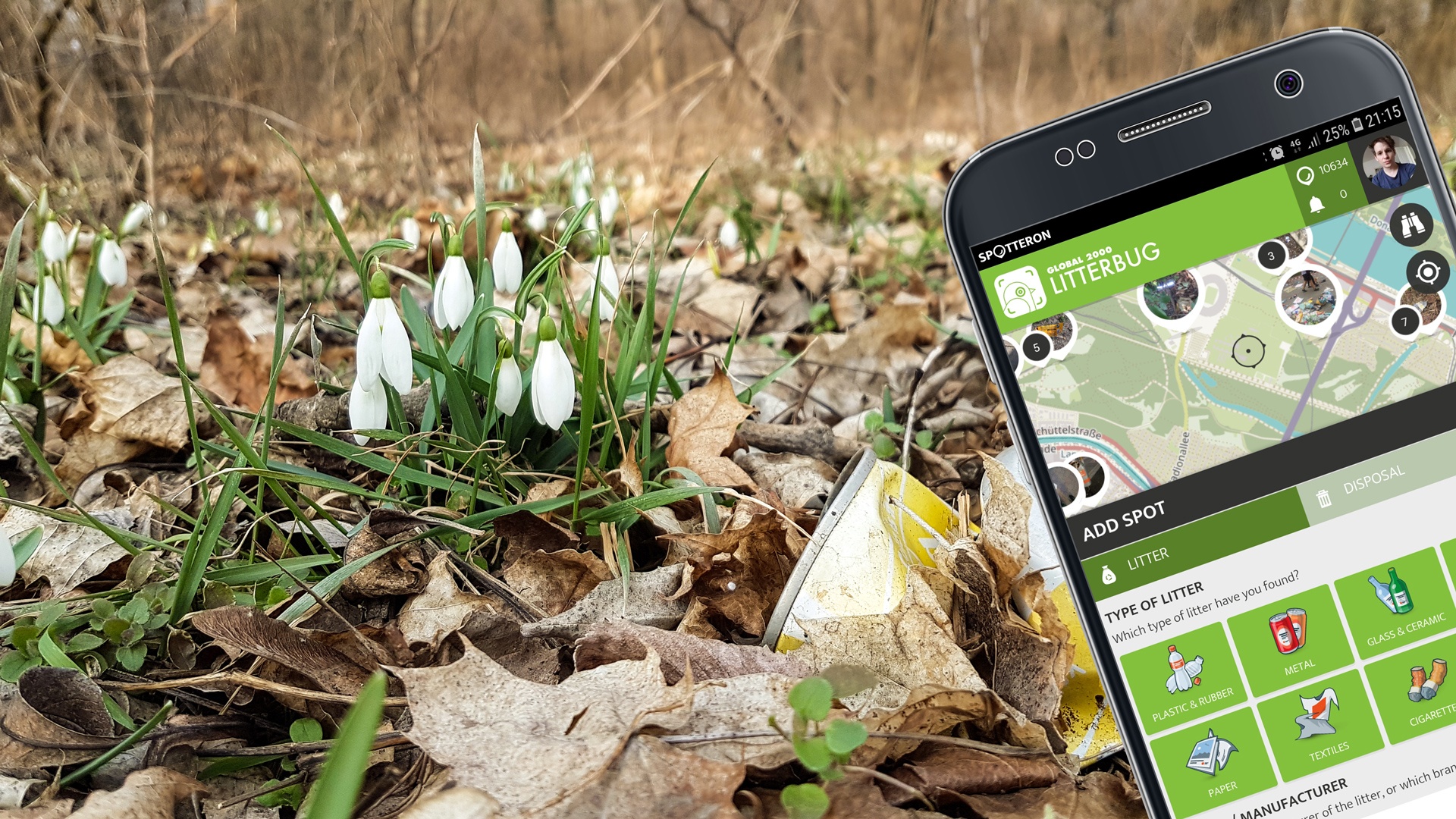
We start today with an interview of Johannes (Global 2000, DreckSpotz App). Download the App here`:. (https://www.global2000.at/dreckspotz)
1. If you’d have to explain “Citizen Science” to a complete stranger on the street, who never heard anything about it, how would you explain it to him/her?
Citizen Science is participative science. Which means, that everybody can participate and share their experiences of their daily life. For example, if somebody has a thermometer installed in the garden and sends the data to the ZAMG, he/she is already participating in a Citizen Science project.
2. In your opinion, how significant are Citizen Science Projects for science?
I’ll answer this question from my point of view (NGO). In every case, Citizen Science is significant for Science nowadays. It is a useful tool to inform society about ongoing projects, to raise the public interest and to motivate citizens to participate in science projects. Citizen Science can be a perfect tool for building awareness.
3. Take a look back to the very beginning of your project. How did Citizen Science changed since then?
In general, the acceptance of Citizen Science has risen. In our project the number of users increased, which is a positive development. Also in the future, we are going to include more Citizen Science in our work as NGO.
4. What are you doing to increase the range of your Citizen Science Project?
The Littering App is running for 2 ½ years now and we have always worked together with partners, as for example the Austrian “Alpenverein”. At the moment we are looking for some new project partners.
Also, the DreckSpotz App is part of the Citizen Science Award 2019 program from April to July 2019. Many schools in Austria are participating in the contest. The fact that the students might win the prices of 1750€ to, increase their motivation. I think this is a big step.
5. How can the quality of the collected data being secured? And how is your project dealing with the collected data?
After we filtered the collected data (unrealistic entries and wrong geo-data are deleted) the experts of the E.C.O. Institute of Ecology are going through the data. After this step, the data of the DreckSpotz App has been published in the Austrian “Littering in the Nature” paper in autumn 2018. I think in every Citizen Science project it is important to know the limits of the collected data.
6. In Citizen Science projects the community, the motivation of each user and the communication between users play a big role. In your opinion, how important is a well working community for Citizen Science projects?
Very important, but always depending on the project. There are Citizen Science projects in which a functional community is essential for the success of a project while in others it is just secondary. In the littering project it is possible to reach our goals without an interacting community. But still we have noticed that an active community might increase the motivation of our users. In our project we have a group of some very active users. They are using the app frequently and exchange opinions about their discoveries. In any case, projects should foster an active community in their tools if possible.
7. Why do you think Citizen Science is so important and should be supported?
At this point I’d like to refer myself to my answer to the second question you have asked me.
8. When you think about the future of Citizen Science, where do you see Citizen Science in 10 years? How does Citizen Science has to change and adjust?
In anycase, Citizen Science has a big potential in every circumstance of life, far beyond my work at the NGO. The more the world becomes connected, the more potential is there. But I also think, that with the globalisation and the connection of the world, the risk is increasing, which means that Citizen Science has far more responsibility than in the past. The protection of personal data of the users is also to be considered here. I think that Citizen Science is stipulated in that area, especially if the data is of a sensitive kind. Because Citizen Science is quite young, the community should take a close watch on that.
We would like to thank Johannes Frauscher for the interview!