Why we recommend not more then 15 options to choose from lists in your Citizen Science app

Wednesday, 23 January 2019 16:43

When developing a Citizen Science app, you can influence usability in many ways. But these crucial decisions can be decisive factors when it comes down to whether they enjoy using it and do so regularly.

The setup of a Citizen Science app can make a great difference

Throughout of more than five years of continously improving the SPOTTERON platform, we optimized our user interface to a point where it is as simple as possible while still delivering all data needed. But many factors are still very individual for every single project.
In general, looks really do matter. Attractive Design is an important factor (Emotion & Design: Attractive things work better), that we enjoy tackling with our long-standing experience in the field, but that's not everything yet.

It is often said, that you can tell a good restaurant apart from a bad one by the number of choices on the menue. If there are very many, it's quite obvious that not all ingredients can be freshly stocked und quickly preparted at all times.

Why people prefer a manageable number of choices

With Citizen Science apps, there are other reasons why we usually advise to rather keep it simple instead of overextending. On principle humans appreciate big varieties, but a list that is much too long can lead to exhaustion and disinterest. This phenomenon called "choice overload" was recently demonstrated in a study (1) by scientists of the California Institue of Technology (Caltech). It turns out that the human brain is not too excited about the additional expenditure of time which comes with large numbers of options. The interpretation of the research results suggests that a range of choices between 8 to 15 is optimal.

For these reasons it also makes sense not to give people an endless list of possible choices when it comes to Citizen Science apps. That could simply overextend users and ultimately lead to them submitting less data.

Of course we still leave final decisions on such topics to projects themselves, but it sure is good to know that science supports our recommendations.

(1) Choice overload reduces neural signatures of choice set value in dorsal striatum and anterior cingulate cortex
Elena Reutskaja, Axel Lindner, Rosemarie Nagel, Richard A. Andersen & Colin F. Camerer
Nature Human Behaviour volume 2, pages 925–935 (2018)

Interface Design in Citizen Science apps

For every project on the SPOTTERON platform we help to build a good and working structure of the project's data from a usability standpoint and put our interface design experience to use. Structuring a category tree which work well is an important task when planning a Citizen Science project.

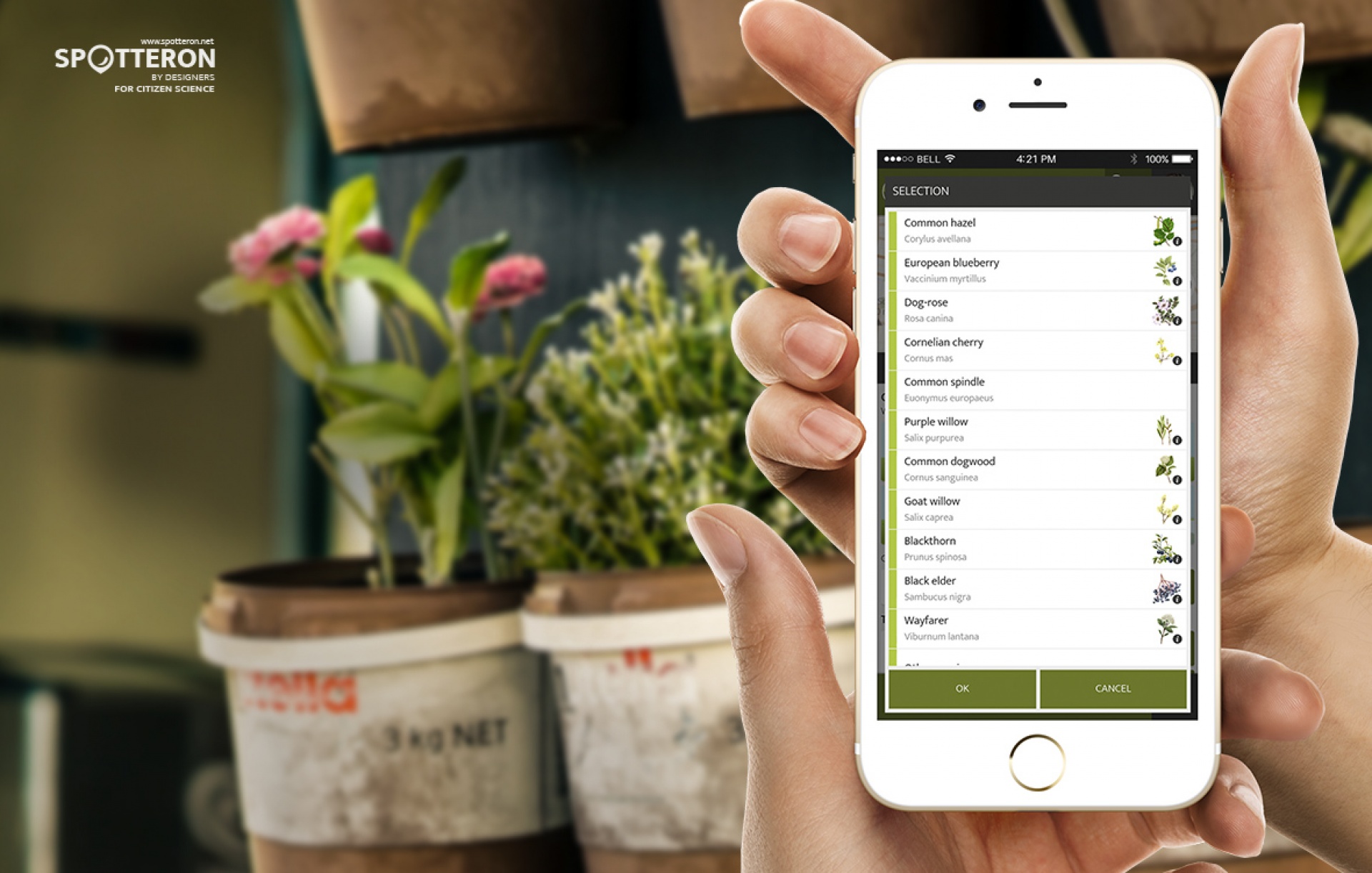
Especially with the possibility to create hierarchical levels in the dialog for adding new observations, creating a structure which results in optimized selection lists is easy. With various elements, we are able to build a customized and tailored interface for your app, which can include selection lists along side with image buttons, which pre-filter a section of the project's data catgories - for example with pre-selecting "trees" in a phenology app users will just have the list of tree species to choose from as the next input step, not all species at once.

With around 15 selection options, the ideal amount of such a selection list is reached - if a selection list gets longer it is not catastrophic. But the longer it gets the more difficult it is for the Citizen Scientists to choose an option intuitively. As with many things in applied design, it's a reference value, not a strict rule.
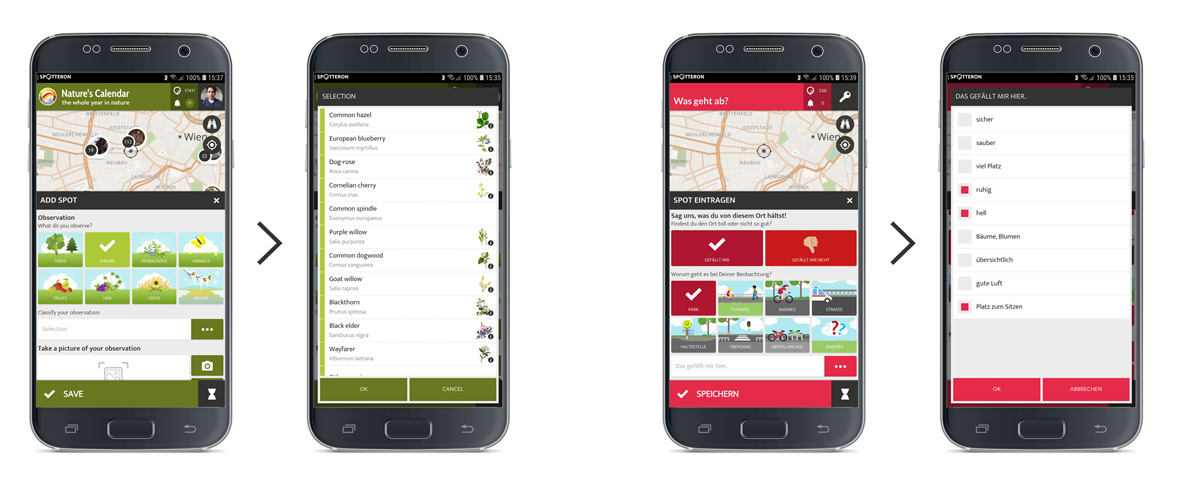
SPOTTERON 15Options SelectionLists Citizen Science Apps 01
Citizen Science Apps: "Nature's Calender ZAMG" - www.naturkalender.at, "Was geht ab?" - www.was-geht-ab.at


See live examples of Citizen Science apps on the SPOTTERON Platform

Projects & Apps open for Co-Use on SPOTTERON

App Icon
Social initiative Data Collection App
SPOTTERON

ArtSpots is a community-built art atlas. Through the App, people interested in various art forms like street art, historical or contemporary art, photography, architecture, and more can put their art observations on the map and discover art spots in their city or while travelling. The art community in the App allows exchanging with other like-minded people and contributing to a worldwide art collection.
Learn more about
ArtSpots
App Icon
Horizon Europe Citizen Science App

With the COSEA App, Citizen Scientists can observe marine environments, document coastal habitats or species, and report on pollution, infrastructure and the blue economy. Their contributions on the map and activity in the app will help scientists better understand the impacts and drivers of marine factors to protect and foster a healthy relationship between humans and seas.

Learn more about
COSEA | Collaboration for Effective Sea Action
App Icon
Environmental Citizen Science, Data Collection App
SPOTTERON

NatureSpots is a non-commercial and free project to discover nature together. In the app, nature photos and sightings of animals, plants or mushrooms can be shared with the community on the map. The app is a new initiative for observing nature and taking part is very simple and straightforward. The app is free of advertising, does not track users and takes digital privacy seriously.

Learn more about
NatureSpots
App Icon
Social initiative Community Engagement App
SPOTTERON

The new citizen participation uses "Citizen Science" in their hometown and nationwide to get User's feedback on places. As a result, citizens are empowered to become active in a city worth living in to collect and share data themselves and to interact with scientists. This enables them to recognize the consequences of sealing, heat, water shortages, and a lack of biodiversity, and generally, how places in their own environment affect us all.

Learn more about
CIVO Citizen Voice
App Icon
Horizon 2020 Invasive Species Monitoring App

The IPM-Popillia Horizon 2020 project aims to address the challenge of a new risk to plant health in Europe's agriculture and food safety: the invasion of the Japanese Beetle, Popillia japonica. This invasive species was introduced accidentally to mainland Europe in 2014 and can quickly spread by transportation and trade. As a species with a wide range of feeding plants, P. japonica threatens the entire agricultural sector, urban landscapes, and biodiversity in invaded areas.

Learn more about
IPM Popillia | Integrated Pest Management of the Japanese Beetle
App Icon
Environmental Community Engagement App

Fridays for Future see itself as a horizontal, grassroots grassroots movement that acts apolitically and refers to science for the facts. To engage the global population more, this app was developed using SPOTTERON. The aim is to find out how the population perceives the climate crisis and which positive and negative emotions are associated with specific topics related to biodiversity and climate crisis.

Learn more about
FRIDAYS FOR FUTURE - Climate App

Are you interested in co-using existing Apps? Get in Contact!

Get in contact for co-use here


Short News

  • New study from BiciZen project: "BiciZen: Lessons in the Development of a Crowdsourcing Mobile App to Make Cities More Bikeable" published in Journal of Participatory Research Methods. More studies available under the publication page here.

    in Shortnews
  • Roadkill project has made wonderful short videos for the citizen scientists! The videos include the Roadkill App functions regarding how to confirm & comment on the spots and how to best take the photos for the project. The videos (in German) are available in the "Österreich forscht" blog here. 

    in Shortnews

Newsletter

Please enable the javascript to submit this form