SPOTTERON
Sustrans

Sustrans is a UK walking and cycling charity and custodian of the National Cycle Network. It works with schools to encourage active travel (cycling, walking or scooting) among students. It also works with employers and local authorities. It administers several thousand volunteers who contribute their time to the charity in numerous ways, such as cleaning and maintaining the National Cycle Network, enhancing biodiversity along the routes, leading walks and rides and supporting communities to improve their air quality.
Trinity College Dublin

Trinity College (Irish: Coláiste na Tríonóide), officially the College of the Holy and Undivided Trinity of Queen Elizabeth near Dublin, is the sole constituent college of the University of Dublin, a research university located in Dublin, Ireland. The college was founded in 1592 by Queen Elizabeth I.
Academically, it is divided into three faculties comprising 25 schools, offering degree and diploma courses at both undergraduate and postgraduate levels.
The Library of Trinity College is a legal deposit library for Ireland and Great Britain, containing over 6.2 million printed volumes and significant quantities of manuscripts, including the Book of Kells.
University of Delaware
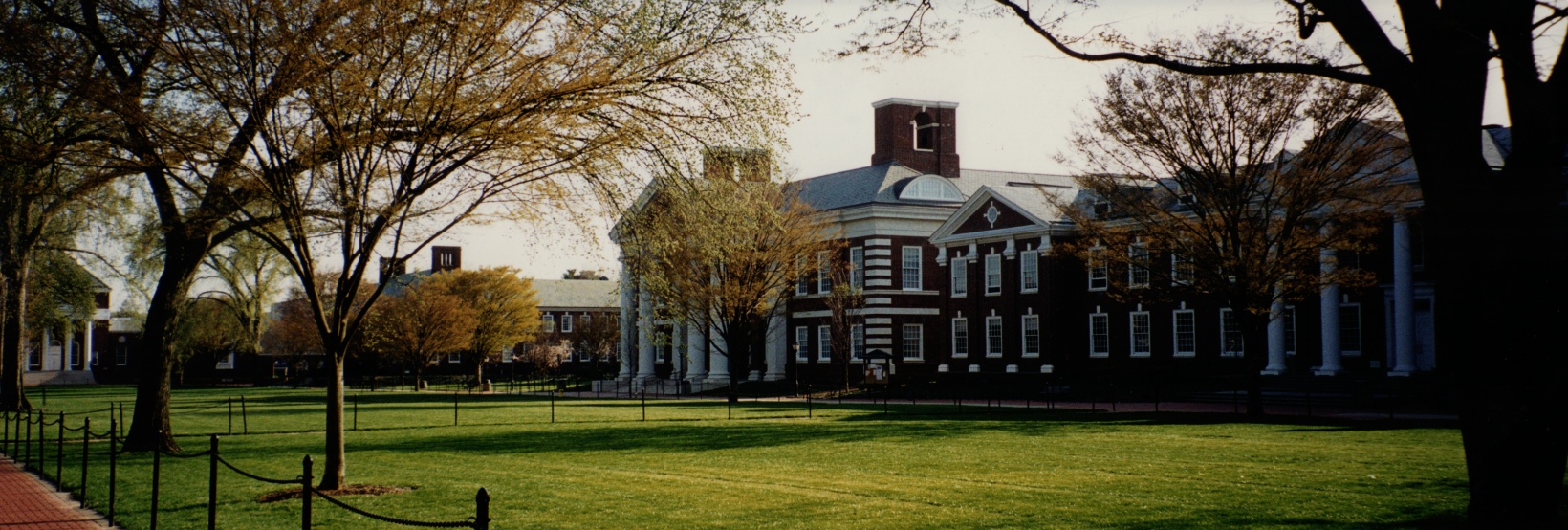
The University of Delaware (colloquially UD or Delaware) is a public research university located in Newark, Delaware. With it's main campus in Newark and satellite campuses in Dover, Wilmington, Lewes and Georgetown, it is consicered a large institution with aprroxmimately 18,500 untergraduate and 4,500 graduate students.
UD is classified as a Doctoral University-Very High Research Activity by the Carnegie Classification of Institutions of Higher Education. UD is one of the top 100 public institutions for federal obligations in science and engineering and interdisciplinary initiatives in energy science and policy, the environment, and in human health.
Ghent University

Ghent University (Dutch: Universiteit Gent, abbreviated as UGent) is a public research university located in Ghent, Belgium. It was established in 1817 by King William I of the Netherlands. After the Belgian revolution of 1830, the newly formed Belgian state began to administer the university. In 1930, the university became the first Dutch-speaking university in Belgium, whereas French had previously been the standard academic language. In 1942 the Book Tower (Boekentoren), the universities most famous building was opened. It houses the Faculty of Arts and Philosophy. Designed by Henry van de Velde, it has since been the chief architectural feature of the library..
University of Edinburgh

The University of Edinburgh (abbreviated as Edin. in post-nominals), founded in 1582, is the sixth oldest university in the English-speaking world and one of Scotland's ancient universities. It layed an important role in leading Edinburgh to its reputation as a chief intellectual centre during the Age of Enlightenment, and helped give the city the nickname of the Athens of the North.
Link: https://www.ed.ac.uk
A starry Citizen Science holiday card

2019 has been an amazing year. The SPOTTERON Citizen Science platform evolved into an even more professional solution for participatory science applications. In summer, we organized the "SPOTTERON Feature Ecosystem" into various thematic packages for a better overview of what the platform brings to every new Citizen Science project. Furthermore, we were able to welcome new project partners from all across Europe, Australia and the United States of America on SPOTTERON.
Release Notes 2.9
The Release Notes of the SPOTTERON platform has been updated, the new version 2.9. brings the new "Validated data" feature with wihich the administrators now can set observations to "checked" and build a validated Citizen Science data set for scientific research directly in the Citizen Science app.
Citizen Science Events
Imagine you can publish your events like workshops or field-trips directly in your Citizien Science app - with the upcoming extensions for all projects on the SPOTTERON platform you can do exactly that. Read more about the new Citizen Science Events extension here in our blog.
Natural History Museum London

The Natural History Museum in London is a natural history museum that exhibits a vast range of specimens from various segments of natural history. It is one of three major museums on Exhibition Road in South Kensington.
The museum is home to life and earth science specimens comprising some 80 million items within five main collections: botany, entomology, mineralogy, paleontology and zoology.
The museum is particularly famous for its exhibition of dinosaur skeletons and ornate architecture—sometimes dubbed a cathedral of nature.
Upcoming app feature: Citizen Science Events

A brand new feature for all Citizen Science apps on the SPOTTERON platform comes with the next release version: Citizen Science Events. With this new extension, the project teams can publish events like workshops or field trips directly in the Citizen Science app. Secondly, it is possible to create area events, to e.g. highlight, where more observations by the Citizen Scientists are needed.
Projects & Apps open for Co-Use on SPOTTERON


ArtSpots



With the COSEA App, Citizen Scientists can observe marine environments, document coastal habitats or species, and report on pollution, infrastructure and the blue economy. Their contributions on the map and activity in the app will help scientists better understand the impacts and drivers of marine factors to protect and foster a healthy relationship between humans and seas.
COSEA | Collaboration for Effective Sea Action



NatureSpots is a non-commercial and free project to discover nature together. In the app, nature photos and sightings of animals, plants or mushrooms can be shared with the community on the map. The app is a new initiative for observing nature and taking part is very simple and straightforward. The app is free of advertising, does not track users and takes digital privacy seriously.
NatureSpots


The new citizen participation uses "Citizen Science" in their hometown and nationwide to get User's feedback on places. As a result, citizens are empowered to become active in a city worth living in to collect and share data themselves and to interact with scientists. This enables them to recognize the consequences of sealing, heat, water shortages, and a lack of biodiversity, and generally, how places in their own environment affect us all.
CIVO Citizen Voice


The IPM-Popillia Horizon 2020 project aims to address the challenge of a new risk to plant health in Europe's agriculture and food safety: the invasion of the Japanese Beetle, Popillia japonica. This invasive species was introduced accidentally to mainland Europe in 2014 and can quickly spread by transportation and trade. As a species with a wide range of feeding plants, P. japonica threatens the entire agricultural sector, urban landscapes, and biodiversity in invaded areas.
IPM Popillia | Integrated Pest Management of the Japanese Beetle


Fridays for Future see itself as a horizontal, grassroots grassroots movement that acts apolitically and refers to science for the facts. To engage the global population more, this app was developed using SPOTTERON. The aim is to find out how the population perceives the climate crisis and which positive and negative emotions are associated with specific topics related to biodiversity and climate crisis.
FRIDAYS FOR FUTURE - Climate App