Multilingualism in Citizen Science projects can significantly contribute to a better long-term motivation of the users, higher impact and more quality data. Read more in our blog!

SPOTTERON
Monday, 15 April 2019 18:51
Citizen Science Interview I - Johannes Frauscher, Global 2000
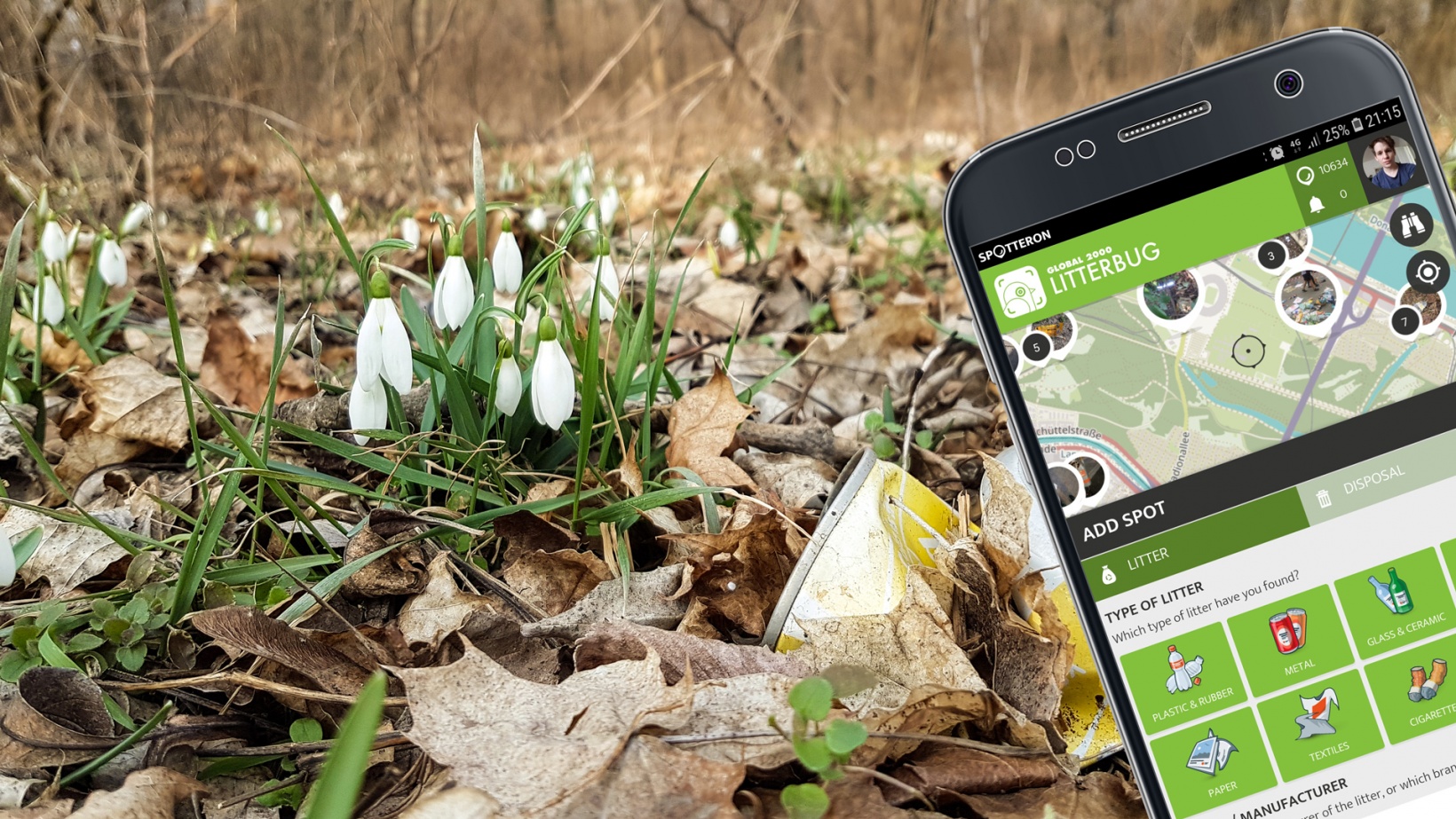
Today marks the release day for our Citizen Science interview series! Continuously we are going to publish interviews with different head of projects running on the SPOTTERON Platform.
Published in
SPOTTERON Citizen Science Blog
Tagged under
Wednesday, 03 April 2019 17:02
Multilingualism in Citizen Science Projects
Published in
Shortnews
Tagged under
Wednesday, 03 April 2019 16:41
Multilingualism in Citizen Science Projects

When developing Citizen Science Apps, the usability has a big impact on how well and frequent people use them in the end. The goal for Citizen Science Apps is to become an important part in the everyday lives of their users in the long term, so that users can gain experience and can contribute important data to scientific projects.
Published in
SPOTTERON Citizen Science Blog
Tagged under
Monday, 25 March 2019 22:09
Landauf, LandApp BW

Landauf, LandApp BW is an interactive data collection project by LEO BW and the National Archive of Baden-Würtemberg in Germany, EU. The Citizen Science App is focused on contributions about landmarks and historical buildings in the area. The project is including local communities and gather their knowledge about their own regions.
Published in
Regional
Tagged under
Monday, 18 March 2019 16:13
Day of Phenology 2019
On Wednesday, the 6th of March, the first "Day of Phenology" took place at the ZAMG in Vienna. We have been invited by one of our project partners from the "Naturkalender App". Read more about it in our Citizen Science blog!
Published in
Shortnews
Tagged under
Monday, 18 March 2019 16:10
Day of Phenology at the ZAMG Vienna
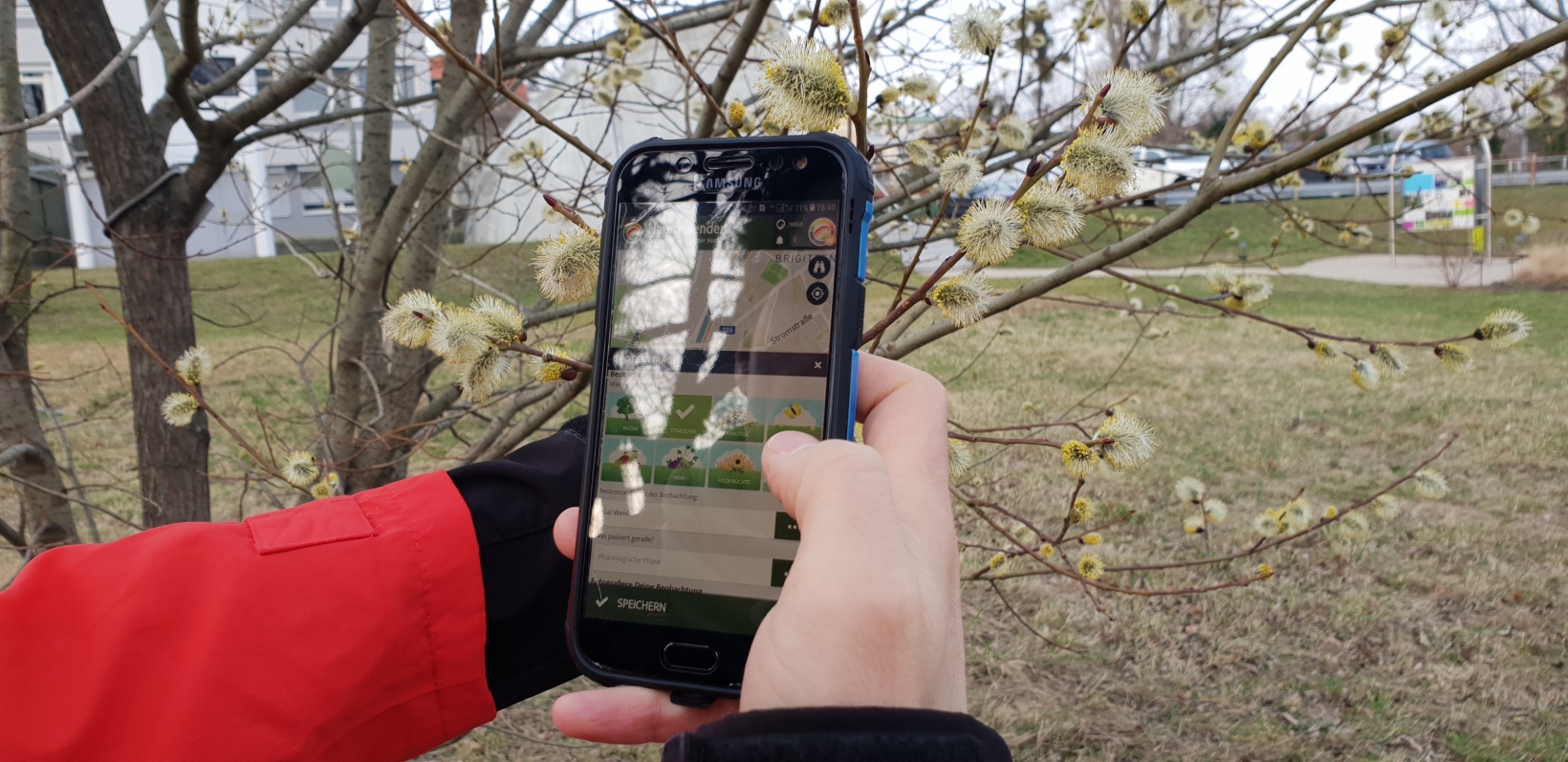
On Wednesday, the 6th of March, the first "Day of Phenology" took place at the ZAMG in Vienna. We have also been invited by one of our project partners from the "Naturkalender App".
Published in
SPOTTERON Citizen Science Blog
Tagged under
Wednesday, 13 March 2019 21:14
#CitSci2019 Special Feature - get your Citizen Science apps 50% off

Currently, the #CitSci2019 conference in Raleigh, NC is going on and we follow the workshops, sessions and comments via twitter from our SPOTTERON Citizen Science design office in Vienna, Europe. But since we always love to support Citizen Science, we decided spontanously to do another special for one project of any participant or group at the conference.
Published in
SPOTTERON Citizen Science Blog
Tagged under
Monday, 04 March 2019 18:16
Citizen Science in the gis.Business Magazine: Knowledge in the Hands of Citizens
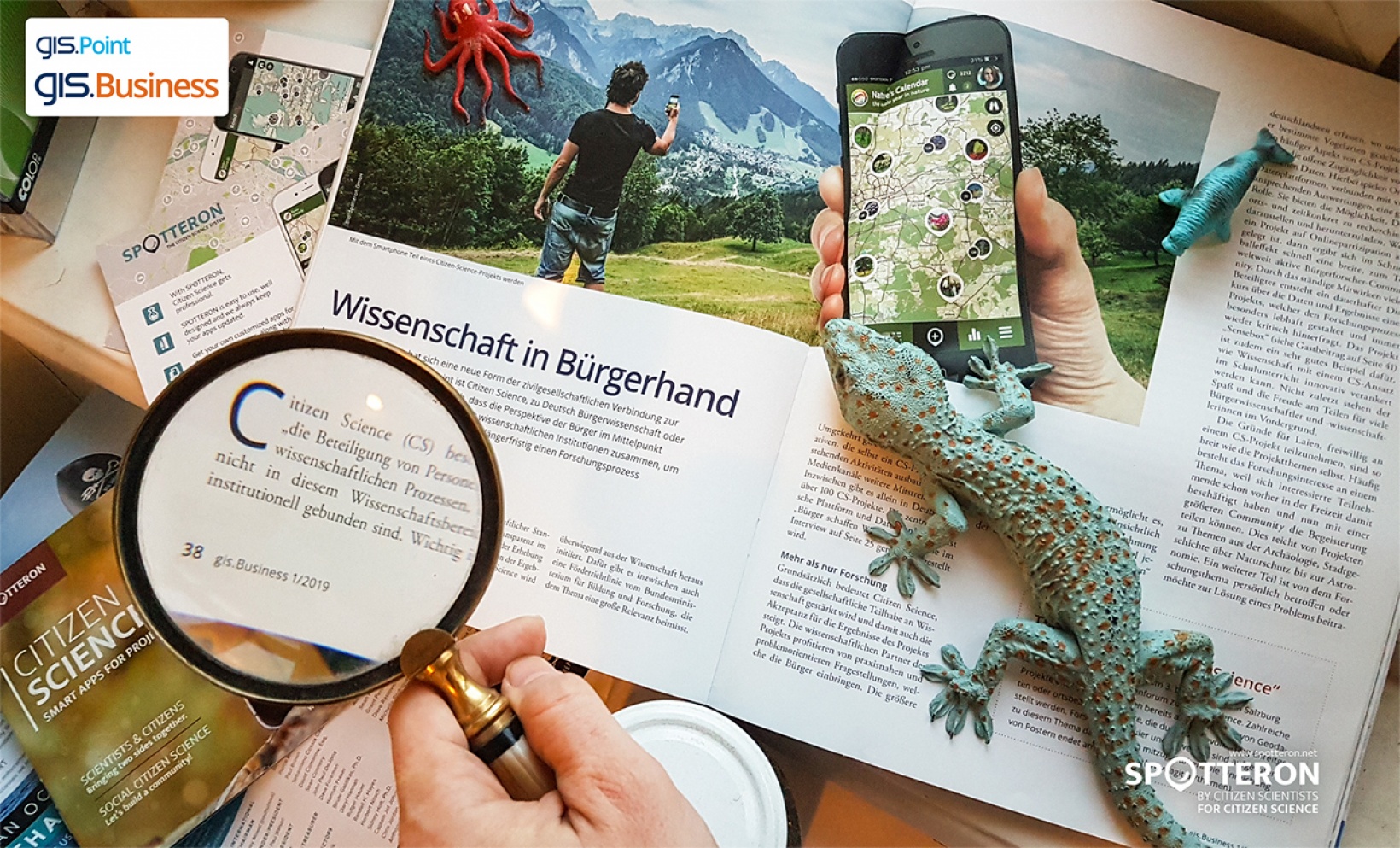
We are very happy to be featured in the new Citizen Sience 4.0 article by Maximilian Ueberham in the gis.Business magazine (Ausgabe 01/2019). After a short introduction about Citizen Science author Maximilian Ueberham presents Citizen Sience projects, including the SPOTTERON Citizen Science platform.
Published in
SPOTTERON Citizen Science Blog
Tagged under
Monday, 04 March 2019 17:34
New Partnerlogos
We are happy to welcome our new partners, from universities to stakeholders in citizen science! On our website partner section you can now find a short description of their facilities and research.
Published in
Shortnews
Tagged under
Tuesday, 26 February 2019 18:35
The House of Science
The House of Science is a leading resource of inspiration and knowledge in Stockholm. House of Science is an educational center initiated in 2001 as a collaboration between KTH Royal Institute of Technology and Stockholm University, which has about 80 000 visitors by year. Since its inception, the main goal has been to increase young peoples´ interest and knowledge in STEM subjects (science, technology, engineering and mathematics) in an exiting environment using relevant themes and age-appropriate hands-on activities.
Published in
Partners
Tagged under
Projects & Apps open for Co-Use on SPOTTERON

Social initiative
Data Collection
App
SPOTTERON

ArtSpots is a community-built art atlas. Through the App, people interested in various art forms like street art, historical or contemporary art, photography, architecture, and more can put their art observations on the map and discover art spots in their city or while travelling. The art community in the App allows exchanging with other like-minded people and contributing to a worldwide art collection.
ArtSpots


Horizon Europe
Citizen Science
App
With the COSEA App, Citizen Scientists can observe marine environments, document coastal habitats or species, and report on pollution, infrastructure and the blue economy. Their contributions on the map and activity in the app will help scientists better understand the impacts and drivers of marine factors to protect and foster a healthy relationship between humans and seas.
COSEA | Collaboration for Effective Sea Action


Environmental
Citizen Science, Data Collection
App
SPOTTERON

NatureSpots is a non-commercial and free project to discover nature together. In the app, nature photos and sightings of animals, plants or mushrooms can be shared with the community on the map. The app is a new initiative for observing nature and taking part is very simple and straightforward. The app is free of advertising, does not track users and takes digital privacy seriously.
NatureSpots

Social initiative
Community Engagement
App
SPOTTERON

The new citizen participation uses "Citizen Science" in their hometown and nationwide to get User's feedback on places. As a result, citizens are empowered to become active in a city worth living in to collect and share data themselves and to interact with scientists. This enables them to recognize the consequences of sealing, heat, water shortages, and a lack of biodiversity, and generally, how places in their own environment affect us all.
CIVO Citizen Voice

Horizon 2020
Invasive Species Monitoring
App

The IPM-Popillia Horizon 2020 project aims to address the challenge of a new risk to plant health in Europe's agriculture and food safety: the invasion of the Japanese Beetle, Popillia japonica. This invasive species was introduced accidentally to mainland Europe in 2014 and can quickly spread by transportation and trade. As a species with a wide range of feeding plants, P. japonica threatens the entire agricultural sector, urban landscapes, and biodiversity in invaded areas.
IPM Popillia | Integrated Pest Management of the Japanese Beetle

Environmental
Community Engagement
App
Fridays for Future see itself as a horizontal, grassroots grassroots movement that acts apolitically and refers to science for the facts. To engage the global population more, this app was developed using SPOTTERON. The aim is to find out how the population perceives the climate crisis and which positive and negative emotions are associated with specific topics related to biodiversity and climate crisis.
FRIDAYS FOR FUTURE - Climate App